




 By Brent Ervin-Eickhoff
•
24 May 2023
•
Updated 15 Jun 2026
•
6 min read
•
Direct Mail & Print Marketing
By Brent Ervin-Eickhoff
•
24 May 2023
•
Updated 15 Jun 2026
•
6 min read
•
Direct Mail & Print Marketing
In today’s fast-paced marketing landscape, digital advertising often takes the spotlight. However, print for event marketing remains a powerful tool to engage audiences and elevate brand recognition. For event organizers, print offers a tangible and interactive way to capture attention. But to maximize its impact, it’s essential to focus on measuring print marketing and understand ROI through clear print advertising metrics.
This article provides an overview of print advertising, highlighting metrics to measure, key performance indicators (KPIs), and practical strategies to track marketing success in your print campaigns. We’ll cover print marketing effectiveness and how to measure effectiveness of advertising campaign elements specific to events.

Why Print is a Powerful Event Marketing Channel
Even in a digital-first world, print marketing provides unique benefits that digital channels can’t fully replicate. A well-designed print ad or print marketing campaign can leave a lasting impression, foster brand awareness, and complement your digital marketing initiatives.
Some of the benefits include:
- Tangible Engagement: Physical print materials create a sensory experience that online ads cannot. Attendees can touch, hold, and interact with your print piece, increasing the likelihood of remembering your event. Think printed posters and banners for event marketing displayed at high-traffic locations, or printed postcards for outreach and promotion mailed directly to your target audience.
- Targeted Distribution: Print allows precise targeting. Printed flyers for targeted event distribution and professionally printed brochures distributed in strategic locations ensure your marketing efforts reach the right people at the right time.
- Enhanced Brand Recognition: Creative design, tactile finishes, and personalized messaging can boost brand recognition and excitement around your event. Custom printed marketing folders and printed booklets for event marketing and brand recognition are great ways to package your event story in something people will actually hold onto.
Understanding the impact of your print marketing requires more than just noticing engagement. You need a structured approach that defines clear metrics to measure, including print advertising metrics, and ensures your print advertising campaign delivers measurable results.
Measuring Marketing Effectiveness: Key Metrics to Measure
Before launching any print advertising campaign, define your goals. Are you aiming to increase event registrations, generate leads, or improve brand awareness? Establishing objectives lets you evaluate the print marketing effectiveness of your initiatives. This is central to measuring print marketing and clarifying how to measure effectiveness of advertising campaign tactics.
Here are some print advertising metrics you can use to evaluate performance and measure print advertising results:
1. QR Codes and Tracking URLs
Including a QR code or tracking URL in your print ad creates an easy way to measure engagement. When scanned, these codes direct attendees to landing pages or registration forms, providing real-time data on conversion rates. Using analytics tools, you can assess success and link results directly to your campaign’s objectives.
2. Coupon Codes and Promotional Offers
Offering exclusive coupons or promo codes helps track responses from your audience. By analyzing how many people used these codes, you can measure the effectiveness of your print marketing efforts and calculate ROI for the campaign.
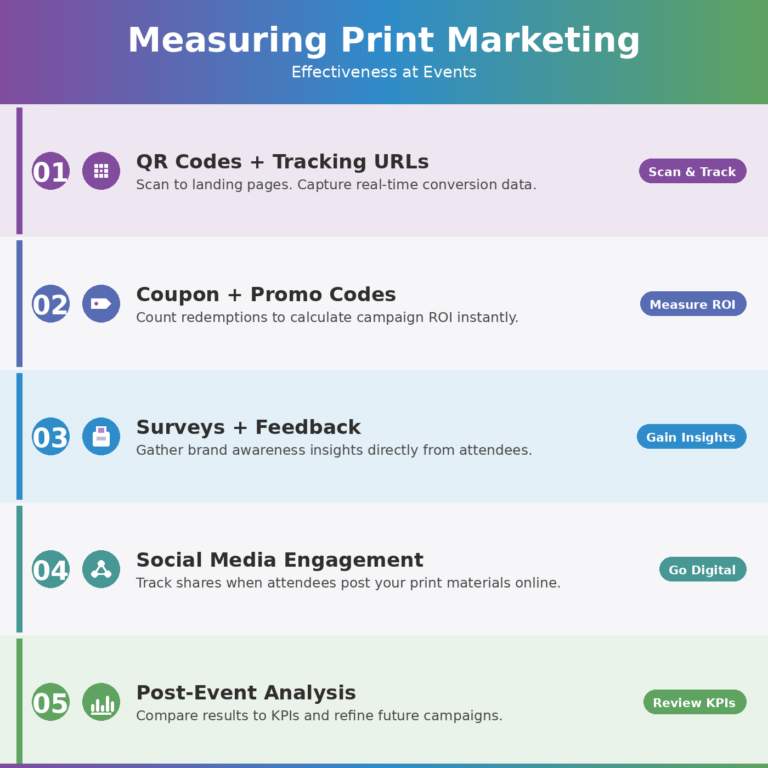
3. Surveys and Feedback
Collecting surveys from attendees allows you to gain qualitative insights into marketing performance. Questions about brand recognition, event awareness, and engagement with your print ad provide actionable data to refine future marketing strategies.
4. Social Media Engagement
Encouraging attendees to share photos of print materials on social media enables you to track response rate and engagement. Integrating print and digital channels enhances marketing success and helps you understand the impact of print marketing beyond physical interactions.
5. Post-Event Analysis
After your event, review participation, conversions, and attendee feedback to assess overall results. Comparing outcomes to your KPIs clarifies how to measure effectiveness of advertising campaign components and improves future campaigns.
Maximizing ROI from Print Marketing
A comprehensive strategy includes more than just distributing print materials. To maximize ROI and marketing success, consider the following approaches while continuously measuring print marketing and reviewing print advertising metrics:
Creative Design and Messaging
Invest in visually compelling print ads that align with your brand. Eye-catching graphics, strong headlines, and the power of branded postcards increases engagement and provide measurable impact. Incorporating variable data printing can further personalize materials.
Targeted Distribution
Understanding your target audience ensures your print marketing campaign reaches those most likely to engage. Strategic placement and audience-specific messaging improve the success of print campaigns and optimize cost per response.
Integrating Print with Digital Marketing
Combine print and digital approaches for a unified strategy. Include social handles, website links, or QR codes on print advertisements to drive traffic and conversion. Use a conference printing checklist to cover the basics. A well-integrated approach strengthens brand recognition and makes print marketing effectiveness easier to quantify.
A/B Testing Print Campaigns
Testing different print ads, designs, or call tracking methods allows you to measure success and refine strategies. Use essential metrics and analytics to identify which materials deliver the highest impact.
Tracking Costs and ROI
Document all expenses and evaluate return on investment to determine cost per lead or conversion. By dividing the total cost of a print marketing campaign by the number of responses generated, you can understand effectiveness and inform future decisions.
Post-Event Follow-Up
Collecting feedback after an event helps identify areas to improve your print initiatives. Analyzing attendee insights provides key metrics and allows adjustments for future campaigns, ensuring success grows over time.
Essential Metrics for Measuring Print Advertising Success
To properly evaluate print marketing effectiveness, focus on metrics that capture both quantitative and qualitative results. These include:
- Response Rate: How many recipients engage with your print ad.
- Conversion: Percentage of leads turning into registrations or sales.
- Cost Per Response: Helps evaluate budget efficiency.
- Brand Awareness: Growth in recognition or mentions after the campaign.
- Call Tracking: Number of inquiries generated through print materials.
- QR Code Scans: Digital interaction from your print advertisement.
- Overall Success: Comparison against initial KPIs.
These essential print advertising metrics help organizations understand the success of a print campaign and guide how to measure effectiveness of advertising campaign performance for future efforts.
Conclusion: Print Marketing Remains a Vital Tool
Despite the rise of online advertising and digital marketing, print marketing remains a tangible and effective method to engage audiences. By consistently measuring print marketing using clear print advertising metrics, event organizers can understand impact, improve performance, and maximize ROI.
Print advertising campaigns, when designed thoughtfully and analyzed rigorously, complement digital advertising, reinforce brand recognition, and contribute to overall marketing success. Whether you’re using QR codes, call tracking, or coupon codes, focusing on print marketing effectiveness ensures your campaigns deliver measurable results.
Discover how to measure the success of your next event by implementing these strategies and focusing on essential metrics, ensuring your print marketing efforts drive tangible outcomes. Get started with Mimeo today for print advertising that boosts your brand.
What you should read next

Brent Ervin-Eickhoff
Director of Marketing
Brent Ervin-Eickhoff is a Chicago-based marketer with B2B and B2C experience spanning corporations, agencies, and non-profits, including five years of experience in print. From Volkswagen to the University of Chicago, his background is focused in crafting marketing campaigns that drive results.

 Mimeo Print
 Mimeo Digital for Participants
 Mimeo Marketplace
 PrintX
 Mimeo Photos