




 By Brent Ervin-Eickhoff
•
13 Mar 2026
•
Updated 23 Sep 2026
•
5 min read
•
Design & Print Production
By Brent Ervin-Eickhoff
•
13 Mar 2026
•
Updated 23 Sep 2026
•
5 min read
•
Design & Print Production
Global document distribution is the process of securely sending, sharing, or publishing documents across international borders. Organizations use a combination of digital platforms, localized printing, and logistics networks to deliver materials quickly and reliably to teams, customers, and partners around the world.
Businesses rely on global document distribution to ensure the correct version of a document reaches the right person, regardless of location. This includes both digital delivery through secure portals and physical delivery through printed materials produced and shipped internationally.

A well designed system helps organizations maintain document security, regulatory compliance, and consistent branding while supporting teams across multiple regions.
What Is Global Document Distribution?
Global document distribution refers to the coordinated process of managing and delivering business documents to recipients in different countries. The process typically includes document creation, version control, localization, production, and delivery.
Organizations distribute many types of documents globally, including:
- training manuals and certification materials
- HR onboarding documents and employee communications
- product guides and technical documentation
- marketing materials and sales proposals
- compliance notices and regulatory documentation
- event materials and conference handouts
By centralizing document management and automating distribution workflows, companies can deliver documents worldwide without manually coordinating printing, shipping, or file sharing across multiple teams. This helps teams build a content strategy that scales.
Key Components of Global Document Distribution
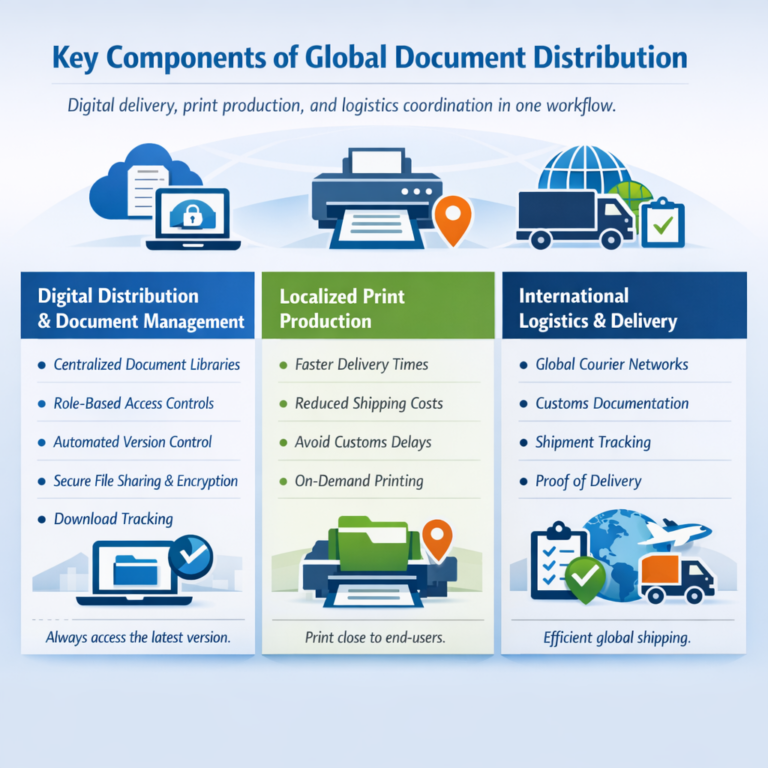
Effective global document distribution combines digital delivery, print production, and logistics coordination into a single workflow.
Digital Distribution and Document Management
Digital distribution allows organizations to share documents instantly through secure platforms. Common methods include document portals, automated email workflows, and secure download links.
Key capabilities often include:
- centralized document libraries
- role based access controls
- automated version control
- secure file sharing and encryption
- tracking of downloads and document activity
These tools help organizations ensure that recipients always access the most recent version of a document and can connect a global network of learners.
Localized Print Production
Many organizations still require printed materials such as training manuals, regulatory documents, or event materials. Localized print production allows documents to be printed closer to their final destination.
Benefits of localized printing include:
- faster delivery times
- reduced international shipping costs
- lower risk of customs delays
- reduced waste through on demand printing
Instead of shipping materials across continents, documents can be produced regionally and delivered locally.
International Logistics and Delivery
When physical delivery is required, global document distribution systems coordinate packaging, shipping, and delivery tracking.
This may include:
- international courier networks
- customs documentation and compliance
- delivery tracking and notifications
- proof of delivery records
Coordinating logistics through a centralized workflow helps organizations maintain visibility across all shipments and avoid delays.
Common Challenges in Global Document Distribution
Distributing documents internationally introduces several operational challenges. Without the right systems in place, organizations often face issues such as:
Version Control Across Regions
When teams in different countries access and update documents, outdated versions can circulate quickly. Centralized document management helps ensure everyone works from the same approved content.
Regulatory and Compliance Requirements
Industries such as healthcare, finance, and education must meet strict regulatory standards when distributing documents. Secure storage, access controls, and audit trails help maintain compliance.
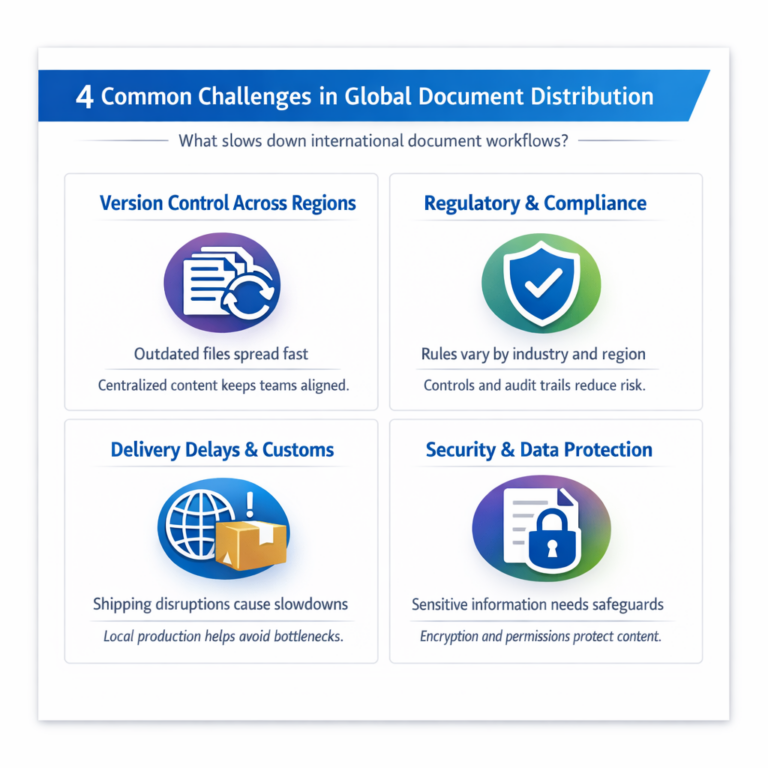
Delivery Delays and Customs Issues
International shipping can be slowed by customs requirements, documentation errors, or logistics disruptions. Local production and automated shipping workflows can reduce these risks.
Security and Data Protection
Sensitive information must be protected during distribution. Encryption, permissions management, and secure delivery systems help safeguard confidential data.
Benefits of Global Document Distribution
Organizations that implement structured global document distribution systems often see measurable improvements in efficiency and reliability. Here’s what digital transformation means for your business:
Faster Document Delivery
Automated workflows and localized printing reduce the time required to produce and distribute materials internationally.
Consistent Branding and Compliance
Centralized document templates ensure teams use approved messaging, branding, and regulatory language across all regions.
Lower Shipping and Production Costs
On demand printing and local production reduce unnecessary shipping and eliminate large print runs that may become obsolete.
Greater Visibility and Tracking
Modern document distribution platforms provide tracking and reporting tools that show when documents are produced, delivered, and accessed.
How Organizations Implement Global Document Distribution
Implementing a global document distribution system typically involves several steps:
- Centralize document storage and management
- Establish version control and approval workflows
- Connect digital and print distribution channels
- Enable localized production when physical documents are required
- Integrate distribution with existing business systems such as CRM, LMS, or procurement tools
This approach creates a repeatable process for producing and delivering documents worldwide.
Choosing the Right Global Document Distribution Solution
Organizations should look for solutions that combine document management, secure distribution, and international logistics into a single platform.
Important capabilities include:
- secure document storage and access controls
- automated workflows and approvals
- on demand printing and global production networks
- digital delivery and document tracking
- integration with existing business systems
When these elements are unified, teams can distribute documents globally without managing separate tools for content management, printing, and shipping.
If your organization distributes materials across multiple countries, exploring a centralized global document distribution platform can help streamline workflows and improve reliability.
Learn how a modern document distribution platform can simplify global document delivery and help teams send materials anywhere in the world. Request a free demo from Mimeo to explore our global solutions.

Brent Ervin-Eickhoff
Director of Marketing
Brent Ervin-Eickhoff is a Chicago-based marketer with B2B and B2C experience spanning corporations, agencies, and non-profits, including five years of experience in print. From Volkswagen to the University of Chicago, his background is focused in crafting marketing campaigns that drive results.

 Mimeo Print
 Mimeo Digital for Participants
 Mimeo Marketplace
 PrintX
 Mimeo Photos