




 By Ethan Cohen
•
6 Apr 2026
•
Updated 6 Oct 2026
•
6 min read
•
Industry Applications
By Ethan Cohen
•
6 Apr 2026
•
Updated 6 Oct 2026
•
6 min read
•
Industry Applications
What is member engagement?
Member engagement is the ongoing relationship between an association and its members, built through participation in events, content, programs, and community. Strong engagement increases retention, satisfaction, and long-term member value.
Key strategies for improving member engagement
- Create a strong onboarding experience
- Personalize communication using segmentation
- Offer valuable events and learning opportunities
- Build community through forums and networking
- Gather feedback and act on it
Why member engagement matters
Member engagement drives retention, growth, and overall member satisfaction. When members regularly interact with your organization, they are more likely to renew, participate in programs, and recommend your association to others. On-demand printing for nonprofits and associations helps with these efforts.

Engaged members:
- Attend events and consume content more frequently
- Contribute through volunteering and leadership roles
- Share your organization with peers
- Provide feedback that improves your programs
This creates a cycle where higher engagement leads to stronger perceived value, which leads to higher retention and growth.
What counts as member engagement?
Member engagement includes any meaningful interaction a member has with your organization, such as:
- Attending events or webinars
- Reading or downloading content
- Participating in online communities
- Volunteering or serving on committees
- Completing surveys or providing feedback
- Logging into member portals or learning platforms
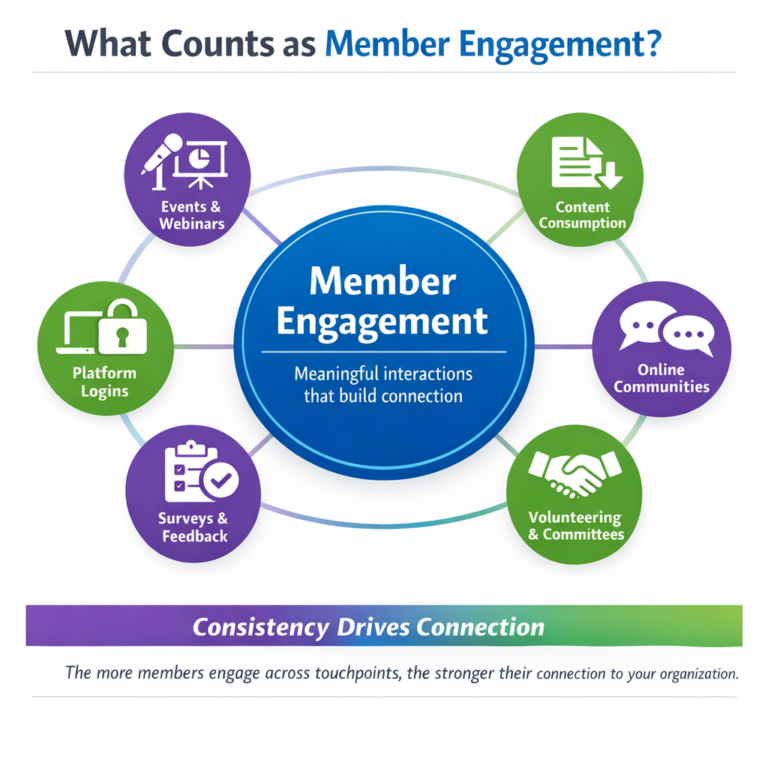
The more consistently members engage across these touchpoints, the more connected they feel to your organization.
How to improve member engagement
1. Personalize communication
Segment your members based on:
- Interests
- Career stage
- Membership tenure
- Past behavior
Then tailor messaging so it feels relevant. Send targeted content, event recommendations, and reminders based on what members actually care about.
2. Improve onboarding
Association onboarding best practices note that the first 60 to 90 days are critical.
Create a structured onboarding journey:
- Welcome email with clear next steps
- Introduction to key benefits
- Invitations to events or communities
- Early engagement opportunities
Keep each message simple and focused on one action.
3. Offer valuable events and content
Provide a mix of formats:
- Webinars and virtual workshops
- In-person networking events
- On-demand content and microlearning
Make content practical and easy to apply. Members should walk away with something they can use immediately.
4. Build community
Create spaces where members can connect:
- Online forums or communities
- Special interest groups
- Networking events
Encourage discussion with prompts, questions, and active moderation.
5. Use technology to remove friction
Make it easy for members to engage by:
- Centralizing data in an AMS or CRM
- Integrating event, learning, and community platforms
- Offering a mobile-friendly experience
- Automating reminders and recommendations
6. Recognize and reward participation
Acknowledge member contributions through:
- Spotlights and shout-outs
- Badges or certifications
- Volunteer recognition
Recognition reinforces engagement and encourages repeat participation.
Types of member engagement activities
Online events and webinars
Offer a mix of formats like panels, workshops, and short sessions. Include interactive elements such as polls and Q and A.
Networking opportunities
Facilitate connections through structured networking, mentorship programs, and small group discussions.
Volunteer programs
Provide clear roles with defined expectations. Offer both short-term and long-term opportunities.
On-demand content and communities
Create an interactive assocation content library with videos, toolkits, and guides. Pair it with active discussion spaces.
Local chapters and affinity groups
Support regional or topic-based groups to create more frequent and personal connections.
Learning and credentialing
Offer certifications, courses, and learning paths tied to career growth.
How to measure member engagement
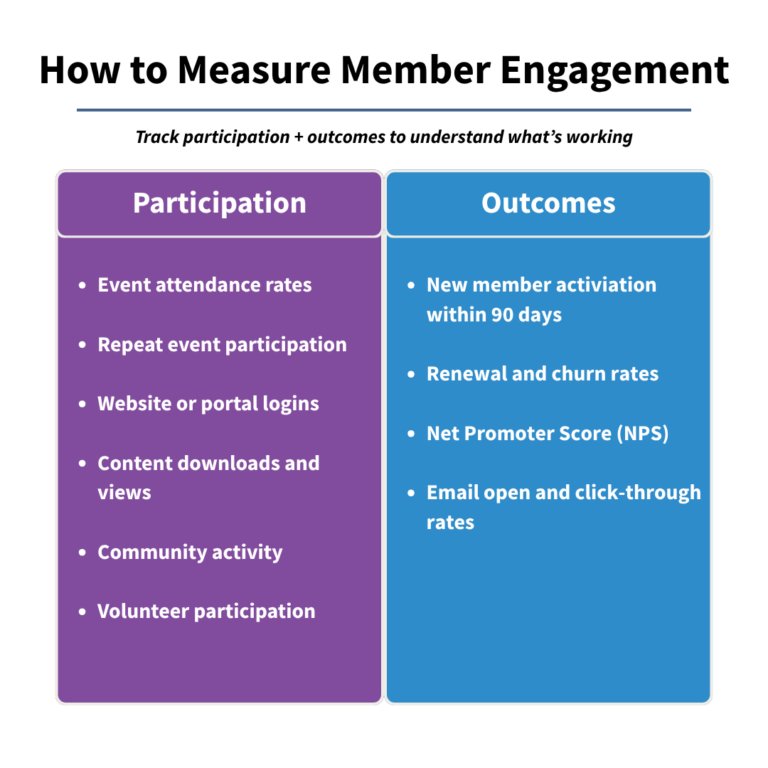
Track both participation and outcomes to understand what is working.
Key member engagement metrics
- Event attendance rates
- Repeat event participation
- Website or portal logins
- Content downloads and views
- Email open and click-through rates
- Community activity such as posts and comments
- Volunteer participation
- New member activation within 90 days
- Renewal and churn rates
- Net Promoter Score (NPS)
How to use engagement data
- Identify which programs drive the most participation
- Spot at-risk members early
- Improve underperforming campaigns
- Test changes and measure impact
What tools improve member engagement?
- Association Management Systems (AMS)
- Customer Relationship Management (CRM) platforms
- Learning Management Systems (LMS)
- Community platforms
- Marketing automation tools
These tools help centralize data, automate communication, and track engagement across channels.
Best practices for sustaining engagement
Keep strategies current
Review performance regularly and adjust programs based on data and feedback.
Build a culture of feedback
Ask for input often and show members how their feedback is used.
Design member-focused experiences
Make it easy to register, access content, and participate. Keep everything clear and simple.
Align teams around engagement
Ensure marketing, membership, events, and education teams are working toward shared goals.
Make engagement visible
Celebrate milestones and contributions so members feel recognized. Custom membership welcome kits for new members are a great way to start.
Common member engagement challenges and solutions
Low new member activation
- Simplify onboarding
- Add personal outreach
- Highlight quick wins
Declining email performance
- Reduce frequency
- Improve targeting
- Test subject lines and formats
Event fatigue
- Vary formats and length
- Add interactive elements
- Offer on-demand options
Low community participation
- Seed discussions with prompts
- Use moderators or ambassadors
- Recognize contributors
Limited volunteer capacity
- Offer flexible roles
- Clearly define expectations
- Provide training and recognition
How to build a member engagement plan
1. Set goals
Define what success looks like, such as improving retention or increasing event participation.
2. Segment your audience
Group members by behavior, interests, and engagement level.
3. Map member journeys
Create structured experiences for onboarding, ongoing engagement, and renewal, including member renewal letter printing for associations.
4. Choose tools and content
Ensure your technology supports your strategy and your content aligns with member needs.
5. Measure and optimize
Track performance, test improvements, and scale what works.
Sample Member Engagement Scorecard
A simple scorecard helps teams monitor progress and prioritize action. Customize the indicators and targets to match your goals and capacity. Use it to align association member engagement strategies with outcomes and keep measuring member engagement consistent across teams.
| Category | Indicator | Target | Review Cadence |
|---|---|---|---|
| Onboarding | New member activation within 90 days | 70% activation | Monthly |
| Events | Average webinar attendance rate | 40% of registrants | Monthly |
| Learning | Course completion rate | 60% completion | Quarterly |
| Community | Active users (monthly) | 35% of members | Monthly |
| Volunteering | Volunteer hours per 100 members | 50+ hours | Quarterly |
| Marketing | Email click-through rate | 3–5% | Monthly |
| Retention | Overall renewal rate | Year-over-year increase | Annual |
Frequently Asked Questions
What is member engagement in associations?
Member engagement is the level of interaction and connection members have with an association through events, content, and community.
Why is member engagement important?
It improves retention, increases satisfaction, and drives long-term growth by delivering consistent value to members.
How do you improve member engagement?
Focus on personalization, strong onboarding, valuable content, community building, and consistent communication.
How do you measure member engagement?
Use metrics like event attendance, engagement rates, logins, renewal rates, and Net Promoter Score.
What tools help with member engagement?
AMS, CRM, LMS, community platforms, and marketing automation tools all help manage and improve engagement.
Final takeaway
Member engagement is not a one-time initiative. It is an ongoing process that requires clear strategy, the right tools, and consistent execution. Start with simple improvements like better onboarding and segmentation, then build from there. When engagement becomes part of how your organization operates, you will see stronger retention, better participation, and a more connected member community.
Ready to turn member engagement into measurable growth?
With Mimeo, you can create, print, and deliver high-impact materials that support every stage of the member journey, from onboarding kits to event collateral. Get started with Mimeo today to increase your association engagement.
Ethan Cohen
Account Executive
Ethan Cohen is an Account Executive at Mimeo, having built his career here from Sales Development Representative to Team Lead and now full-cycle sales. He brings a strategic, relationship-driven approach to turning market opportunities into long-term client partnerships, including with nonprofits and associations looking to stretch their print and content budgets further. His posts help businesses think through how to build strong, sustainable sales processes and get real value from their vendor relationships.

 Mimeo Print
 Mimeo Digital for Participants
 Mimeo Marketplace
 PrintX
 Mimeo Photos