




 By Brent Ervin-Eickhoff
•
1 Apr 2026
•
Updated 23 Sep 2026
•
8 min read
•
Industry Applications
By Brent Ervin-Eickhoff
•
1 Apr 2026
•
Updated 23 Sep 2026
•
8 min read
•
Industry Applications
Member retention measures the percentage of members who renew their membership over a given period. It’s a key indicator of organizational health, revenue stability, and long-term value.
At a basic level, retention answers one question: are you giving members a strong enough reason to stay?

Strong retention reflects clear value, consistent engagement, and a smooth member experience. Most associations aim for retention rates above 80 to 85 percent, but the real goal is steady improvement over time.
Even small gains can have a big impact. Higher retention lowers acquisition costs, stabilizes revenue, and builds a more engaged member base.
The rest comes down to execution. With the right metrics and a clear plan, your team can improve retention without adding complexity.
Member Retention Rate Formula
Retention Rate = ((End Members − New Members) ÷ Start Members) × 100
This formula ensures you measure only members who were eligible to renew, giving you a clear and consistent view of performance.
Why Member Retention Matters
- Reduces member acquisition costs
- Stabilizes recurring revenue
- Increases lifetime member value
- Strengthens engagement and advocacy
Even small gains in retention can significantly improve long-term growth and organizational stability.
Key Member Retention Metrics
- Retention Rate: Percentage of members who renew in a given period
- Churn Rate: Percentage of members who do not renew
- Renewal Rate by Segment: Retention across member types, tenure, or demographics
- Time-to-Renewal: How long it takes members to complete renewal
- Net Revenue Retention (NRR): Revenue retained from existing members after churn or downgrades
- Member Lifetime Value (LTV): Total projected value of a member over time
- Engagement Signals: Activity such as event attendance, logins, and content usage
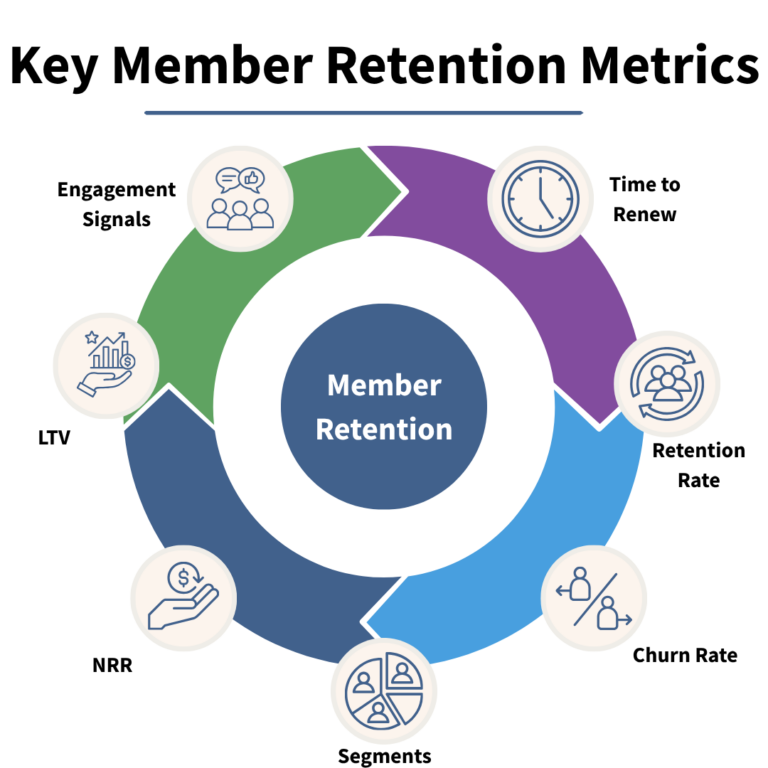
Use consistent definitions across teams so reporting stays aligned and actionable.
Effective Member Retention Strategies
- Onboarding: Help new members understand and use benefits immediately using custom membership welcome kits
- Engagement Tracking: Monitor behavior to identify at-risk members early
- Value Delivery: Provide consistent, relevant benefits that match member needs
- Personalized Communication: Tailor outreach based on preferences and behavior
- Incentives: Offer exclusive benefits, rewards, or recognition
- Flexibility: Allow payment options or pauses instead of full cancellation
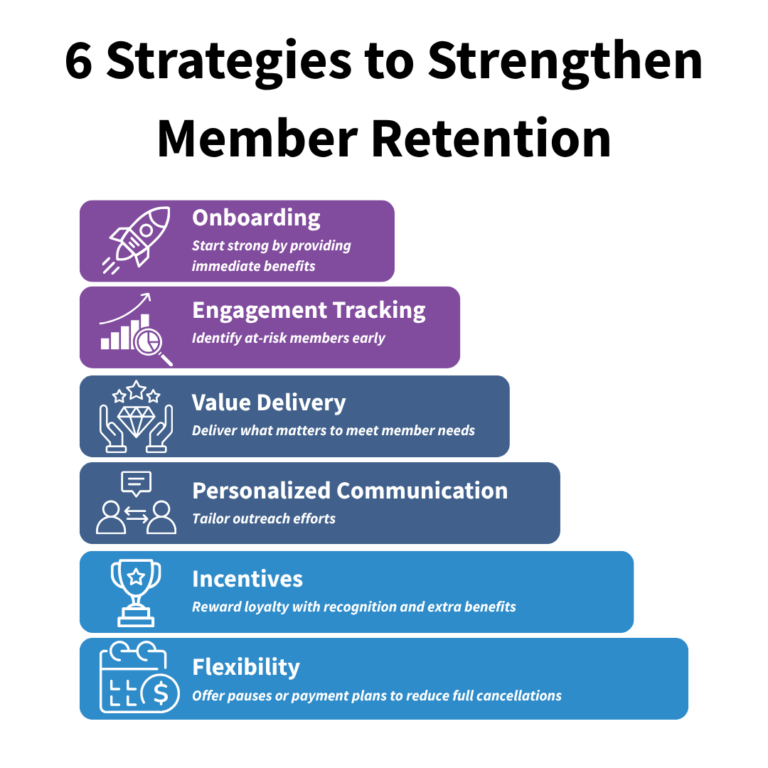
These strategies work best when applied together as part of a coordinated retention program.
The Importance of Member Engagement
Member engagement is the strongest predictor of retention. Members who actively participate in events, communities, or content are significantly more likely to renew.
Engagement signals that members see real value in their membership. It also builds stronger emotional connection and long-term loyalty.
To improve engagement, follow member engagement strategies for associations:
- Create opportunities for connection through events and communities
- Encourage participation in discussions, mentorship, and content sharing
- Gather feedback regularly and act on it
- Highlight member success and contributions
When members feel connected and supported, they stay longer and contribute more.
Using Technology to Improve Member Retention
Technology supports consistent, personalized engagement at scale. The right systems help you track behavior, automate Technology should make retention easier, not more complicated. The goal is simple: give your team better visibility into member behavior and make it easier to stay connected.
Start by centralizing your data in an AMS or CRM so you can see the full picture of each member. When your data is scattered, it becomes much harder to spot who is engaged and who is at risk.
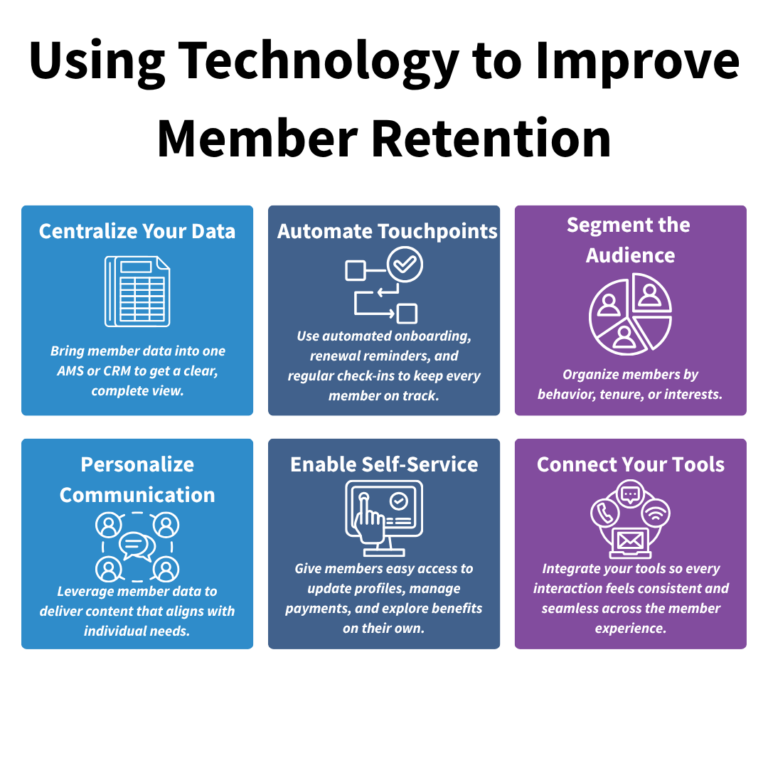
From there, focus on a few high-impact improvements:
- Automate key touchpoints: Set up onboarding emails, membership renewal reminders, and check-ins so no one falls through the cracks
- Segment your audience: Group members by behavior, tenure, or interests so your messaging actually feels relevant
- Personalize communication: Use what you know about your members to send content they will care about
- Use on-demand printing: Print fulfillment solutions for membership-based organizations allow you to order what you need, when you need it
- Enable self-service: Let members manage their profiles, payments, and benefits without friction
- Connect your tools: Make sure your systems work together so the experience feels seamless
You don’t need a complex tech stack to get this right. Start with the basics, focus on consistency, and build from there.
How to Identify and Reduce Member Churn
Most member churn is not random. It usually follows patterns you can spot early if you know what to look for.
Members often leave because they stop seeing value or stop engaging altogether. In many cases, the signals show up weeks or even months before they decide not to renew.
Common signs of churn risk
- Declining event attendance
- Lower email engagement
- Fewer logins or interactions
- Missed renewal reminders
How to respond
- Pay attention to early signals
Look for changes in behavior, not just final outcomes. - Step in early
A simple check-in or targeted message can re-engage a member before they fully disengage. - Make renewal easy
Remove unnecessary steps and make it clear what members need to do next. - Keep showing value
Do not wait until renewal season. Remind members what they are getting throughout the year. - Offer flexibility
If cost is a concern, options like installment plans can make a big difference.
When you catch issues early and make it easy to stay, retention improves naturally.
How to Re-Engage Lapsed Members
Re-engagement campaigns can recover valuable members when handled with the right message and timing.
Follow this approach:
- Acknowledge the lapse
Keep the tone helpful and respectful. - Highlight what has changed
Share new benefits, programs, or improvements. - Personalize the message
Reference past engagement or interests with membership drive printing for associations. - Include a clear incentive
Offer a limited-time discount, waived fee, or bonus benefit. - Make it easy to return
Provide a direct link or quick renewal option.
For high-value members, add a personal outreach from staff or leadership to rebuild the relationship.
Key Metrics and Benchmarks to Track
Tracking the right metrics helps you understand performance and prioritize improvements.
| Metric | What It Shows | How to Use It |
|---|---|---|
| Retention Rate | Percentage of members renewing | Measure overall performance |
| Renewal by Segment | Retention across groups | Identify gaps and opportunities |
| Churn Rate | Members lost | Track and reduce attrition |
| Time-to-Renewal | Speed of renewal | Improve convenience |
| Net Revenue Retention | Revenue retained | Measure growth from existing members |
| Member Lifetime Value | Long-term value | Guide investment decisions |
| Engagement Indicators | Activity levels | Predict and prevent churn |
Review these metrics monthly and align teams around a shared definition of success.
A Practical Member Retention Plan for 2026
If you aren’t sure where to start, focus on building a simple, repeatable process. You don’t need a massive overhaul to see results.
Here is a straightforward way to approach it:
Step 1: Get a clear baseline
Measure your current retention rate and identify where you are losing members.
Step 2: Map the member experience
Look at key moments like onboarding, first engagement, and renewal. These are where retention is won or lost.
Step 3: Fix onboarding first
Association onboarding best practices tell us the first 30 days set the tone. Make sure new members quickly understand how to get value.
Step 4: Segment your audience
Not all members are the same. Group them by needs and behavior so you can communicate more effectively.
Step 5: Automate the essentials
Set up reminders and campaigns so your team can stay consistent without extra manual work.
Step 6: Create ongoing engagement
Give members reasons to come back through events, content, and community.
Step 7: Review and adjust
Check your data regularly and make small improvements over time.
The key is consistency. Small, focused changes applied regularly will have a bigger impact than one-time efforts.
Member Retention Trends for 2026
Member expectations continue to evolve. Successful organizations are adapting in several key ways:
- Personalization at scale: Using data to tailor content, communication, and benefits
- Flexible membership models: Offering tiers, add-ons, and payment options
- Digital-first engagement: Expanding virtual events, communities, and learning
- Credentialing and recognition: Providing certifications and digital badges
- Always-on communication: Maintaining engagement between renewal cycles
Organizations that focus on convenience, relevance, and measurable value will see stronger retention outcomes.
Frequently Asked Questions
What is member retention?
Member retention is the percentage of members who continue their membership over a specific period. It measures how well an organization delivers ongoing value.
What is a good member retention rate?
Most associations aim for 80 to 85 percent or higher. However, benchmarks vary by industry, pricing model, and member type. Focus on improving your own trend over time.
What causes low member retention?
Common causes include unclear value, low engagement, poor onboarding, pricing concerns, and complicated renewal processes.
How can associations improve member retention?
Start with strong onboarding, track engagement, personalize communication, simplify renewals, and consistently demonstrate value throughout the year.
What role does engagement play in retention?
Engagement is the strongest predictor of retention. Members who actively participate are significantly more likely to renew.
Next Steps
Start with a focused plan. Measure your current retention rate, improve onboarding, and simplify renewals. Then build consistent engagement through content, community, and personalized communication.
Member retention is not a one-time effort. It is an ongoing process of delivering value, reducing friction, and strengthening relationships. With the right strategy, your organization can turn new members into long-term advocates.
Ready to improve member retention without adding complexity?
Mimeo helps associations create, manage, and deliver the materials that keep members engaged, from onboarding kits to event collateral and ongoing communications. Explore our association print and fulfillment solutions today.

Brent Ervin-Eickhoff
Director of Marketing
Brent Ervin-Eickhoff is a Chicago-based marketer with B2B and B2C experience spanning corporations, agencies, and non-profits, including five years of experience in print. From Volkswagen to the University of Chicago, his background is focused in crafting marketing campaigns that drive results.

 Mimeo Print
 Mimeo Digital for Participants
 Mimeo Marketplace
 PrintX
 Mimeo Photos