



 By Shari Cooke
•
10 Mar 2026
•
Updated 1 Oct 2026
•
10 min read
•
Design & Print Production
By Shari Cooke
•
10 Mar 2026
•
Updated 1 Oct 2026
•
10 min read
•
Design & Print Production
A saddle-stitched booklet is a multi-page print piece made by folding sheets in half and stapling them along the center fold. The result is a compact, professional booklet that works well for brochures, catalogs, event programs, newsletters, and more.
It’s one of the most economical binding methods for short and medium runs. You get quick production, a clean finish, and pages that turn easily. If you need speed and value, saddle stitch printing is a reliable choice.
What Is Saddle Stitch Binding?
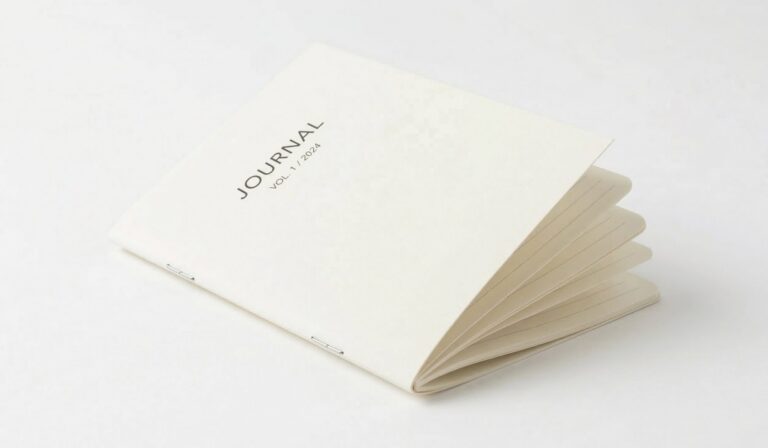
Saddle stitch binding is a method that nests folded sheets together and secures them with wire staples through the center fold. The name comes from the “saddle,” a V-shaped cradle that holds the sheets in place during stapling. The staples pass through the fold and clinch on the inside, so your pages stay firmly in place.
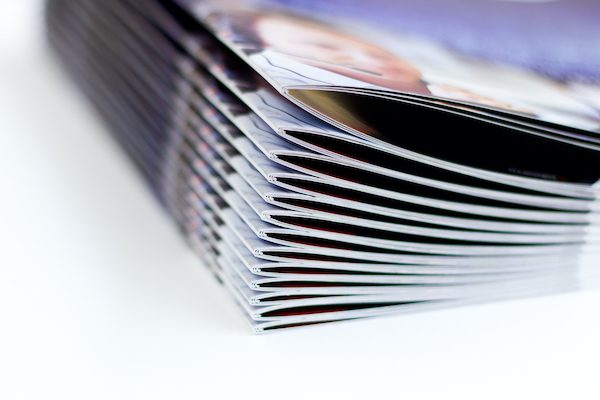
A saddle-stitched booklet has three basic parts: the interior pages, the cover, and the staples. The cover can use the same paper as the interior (called a self-cover) or a heavier card stock (called a plus-cover) for extra durability.
You’ll see saddle stitching on marketing brochures, lookbooks, product catalogs, company newsletters, training handouts, conference event programs and playbills, restaurant menus, price lists, and mini magazines. It opens nearly flat, costs less than most other bindings, and turns around fast. That makes it a go-to when you need a polished piece on a tight timeline.
What Are the Benefits of Saddle-Stitched Booklets?
The main benefits of saddle-stitched booklets are low cost, fast turnaround, and design flexibility. Here’s what each one means for your project.
It’s cost-effective for short runs. A saddle-stitched booklet uses fewer materials and less labor than perfect binding or Wire-O. Setup costs stay low, so small quantities stay budget-friendly. That makes it a smart option for testing new content or producing limited editions.

It turns around fast. Folding and stapling is a simple process, so projects move quickly from press to finished booklet. When you print with us, you can order by 10pm ET and have your booklets delivered as early as 8am the next day. That’s a big help for pop-up events, last-minute updates, and promotions with a hard deadline.
It’s flexible. You can adjust page count, paper, and color to suit your content. Create a slim handout or a fuller catalog, run full-bleed images, and use near-flat spreads for charts, infographics, and photo layouts. Finished booklets stack neatly, travel well, and are easy to hand out at trade shows, retail counters, classrooms, and conferences.
How Is a Saddle-Stitched Booklet Made?
A saddle-stitched booklet is made by printing pages on large sheets, folding and nesting those sheets, stapling them through the fold, and trimming the edges. Here’s the full process:
- Page setup. Pages are arranged so they appear in the correct order once the sheets are folded.
- Printing. Pages print on larger sheets, with several pages on each side.
- Folding and nesting. Each sheet is folded at the center and nested inside the others in sequence.
- Stapling. Wire staples go through the fold to bind the booklet.
- Trimming. The open edges are trimmed so every page lines up cleanly.
- Quality check. The finished booklets are checked for page order, staple placement, alignment, and color before they ship.
One thing to plan for in thicker booklets is creep. Creep is the slight outward shift of the inner pages that happens when many sheets are folded together. If you don’t account for it, text and images near the outer edge of your center pages can end up too close to the trim. Leave a little extra margin on the outside edges of your pages and your layout will stay even after trimming.
imming. Following these steps ensures your saddle stitch booklet looks sharp and performs well in the real world.
Why Do Saddle-Stitched Booklets Need Pages in Multiples of Four?
Saddle-stitched booklets need page counts in multiples of four because each folded sheet creates four pages. That means your total has to be 8, 12, 16, 20, and so on. The count includes the cover pages.
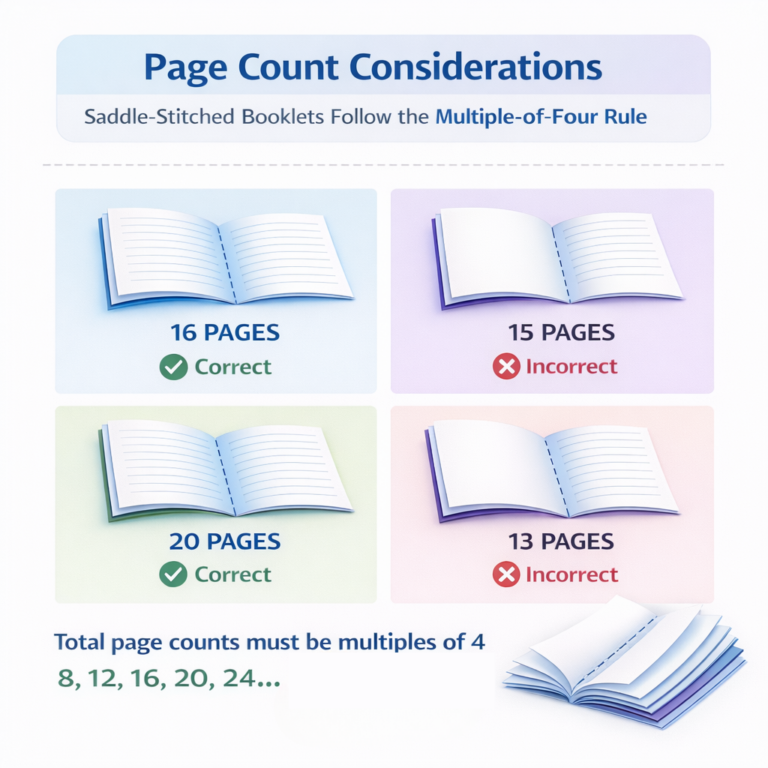
If your content doesn’t land on a multiple of four, add blank pages, a notes page, or an extra image to reach the right total. Plan for this early so you’re not reworking your layout at the last minute.
How Many Pages Can a Saddle-Stitched Booklet Have?
A saddle-stitched booklet can have up to 64 pages when you print with us, and most start at 8 pages. Here’s what to know before you start designing.
Minimum page count: Most saddle-stitched booklets start at 8 pages. Anything shorter usually works better as a folded brochure or flyer.
Maximum page count: We saddle stitch booklets up to 64 pages. Past that point, the fold gets too bulky for staples to hold securely, the booklet won’t close flat, and creep becomes harder to manage.
Paper choice affects the limit. Heavier paper adds bulk faster than lighter paper. If your booklet is close to 64 pages, a lighter interior stock can keep it slim and easy to close.
Here’s a quick guide to common page counts:
| Page count | Common uses |
|---|---|
| 8 pages | Simple brochures, event programs |
| 12 to 16 pages | Product overviews, menus, newsletters |
| 20 to 28 pages | Catalogs, lookbooks |
| 32 to 64 pages | Magazines, training guides, longer catalogs |
If your project runs longer than 64 pages, a perfect bound booklet is usually the better fit. Spiral or twin loop binding also works well for longer documents that need to lie flat.
Want to learn more? Read our guide to booklet printing.
What’s the Difference Between Saddle Stitch and Perfect Binding?
The difference is that saddle stitch staples folded sheets through a center fold, while perfect binding glues stacked pages to a wraparound cover to create a flat, square spine. Saddle stitch is faster and more affordable for booklets up to 64 pages. Perfect binding is better for longer, more durable pieces.
| Feature | Saddle stitch | Perfect binding |
|---|---|---|
| How it binds | Wire staples through a center fold | Pages glued to a wraparound cover |
| Spine | Folded edge, no flat spine | Square, flat spine |
| Page count | Multiples of 4, up to 64 pages | Higher page counts; needs enough pages to form a spine |
| Opens flat? | Nearly flat | No, pages curve toward the spine |
| Durability | Good for short-term and occasional use | Built for longer life and frequent handling |
| Cost for short runs | Lower | Higher |
| Turnaround | Faster | Longer |
| Printable spine | No | Yes, for a title or logo |
| Best for | Event programs, newsletters, menus, short catalogs | Annual reports, manuals, longer catalogs, books |
How Do You Choose the Right Binding for Your Booklet?
Choose your binding based on three production decisions: your final page count, how long the booklet needs to last, and whether readers need it to lie flat. Settle these before you design, since page count and binding affect your layout, paper choice, and margins.
Start with page count. If your booklet is 64 pages or fewer, saddle stitch is usually the fastest and most affordable option. Over 64 pages, move to perfect binding or a coil binding.
Think about how it will be used. A booklet for a single event, season, or campaign rarely needs more than saddle stitch. A reference guide or catalog that gets pulled off a shelf for months is a better fit for perfect binding.
Decide whether it needs to lie flat. Workbooks, training guides, and anything readers write in or keep open on a desk work best with spiral or twin loop binding.
Here’s what we offer for booklets and when each one makes sense:
| Binding | What we offer | Best for |
|---|---|---|
| Saddle stitch | Up to 64 pages, in multiples of four | Event programs, newsletters, menus, short catalogs |
| Perfect binding | Available through special instructions | Longer catalogs, annual reports, manuals |
| Spiral | Black, white, blue, or clear coil | Training guides and manuals that need to lie flat |
| Twin loop | Black or silver wire | Workbooks and presentations with a polished, lay-flat finish |
You can compare all of these side by side when you set up your booklet order.
How Can You Customize a Saddle-Stitched Booklet?
You can customize a saddle-stitched booklet by choosing its size, interior paper, cover stock, and color. When you build one with us, your options include:
- Size: 8.5″ x 11″, 5.5″ x 8.5″, A4, or A5.
- Interior paper: Economy, Value, Premium White, Premium White 100% Recycled, Glossy White, or Colored Paper.
- Cover stock: White Card Stock, White 100% Recycled, or Glossy White.
- Color: Full color or black and white.
Self-cover or plus-cover? A self-cover uses the same paper for the cover and interior, which keeps weight and cost down. A plus-cover uses heavier card stock for a sturdier feel and richer color. We recommend a plus-cover for booklets that get handled often, sit on retail displays, or go through the mail.
You can also build in design details that make your booklet more useful. Add QR codes to connect readers to digital content, or include a tear-out order form or reply card on the back pages.
If you’re mailing your booklets, check postal size and weight guidelines first. A lighter stock or smaller size can make a big difference in postage costs.
How Do You Create a Saddle-Stitched Booklet Online?
You can create a saddle-stitched booklet online in the Booklet Builder inside Mimeo Print. Once you set up a Mimeo account and log in, upload your file, choose your size, paper, and cover, and preview every spread before you print. If your page count isn’t a multiple of four, you can insert blank pages right in the preview. Because you print on demand, you can update your booklet anytime and order only what you need.
Set up your Mimeo account to start building saddle-stitched booklets
Frequently Asked Questions
Is saddle stitching the same as stapling?
Saddle stitching is a type of stapling, but the staples go through the center fold of nested sheets instead of the corner or edge of a flat stack. That’s what lets a saddle-stitched booklet open and turn like a magazine.
Is saddle stitch cheaper than perfect binding?
Yes. Saddle stitch is usually cheaper than perfect binding for short and medium runs because it uses fewer materials and a simpler production process.
What happens if my page count isn’t a multiple of four?
You’ll need to add or remove pages to reach a multiple of four. Most people add blank pages, a notes page, or a full-page image at the end of the booklet.
Do saddle-stitched booklets lie flat?
Saddle-stitched booklets open nearly flat, which makes them good for spreads, charts, and photo layouts. If you need a document that stays completely flat on a desk, spiral or twin loop binding is a better choice.
How long do saddle-stitched booklets last?
Saddle-stitched booklets hold up well for short-term and occasional use, like an event, a season, or a single campaign. For materials that get handled daily or need to last for years, perfect binding or a sturdier binding is a better fit.
Can you mail a saddle-stitched booklet?
Yes. Saddle-stitched booklets are a popular choice for mailed catalogs and newsletters. Check postal size and weight guidelines before you finalize your design, and consider a plus-cover so your booklet arrives in good shape.
Key Takeaways
- A saddle-stitched booklet is made by folding sheets in half and stapling them through the center fold.
- Page counts must be multiples of four, including the cover.
- We saddle stitch booklets from 8 pages up to 64 pages.
- Saddle stitch is faster and more affordable than perfect binding, while perfect binding is better for longer, more durable booklets.
- Choose your binding based on page count, how long the booklet needs to last, and whether it needs to lie flat.
- You can choose from four sizes, a range of interior and cover stocks, and full color or black and white.
- Plan for creep in thicker booklets by leaving extra margin on the outside edges of your pages.

Shari Cooke
Director of Customer Service
Shari Cooke is Director of Customer Service for Mimeo Business US, with more than 12 years at Mimeo and a background in graphic design that gives her a unique eye for both the creative and operational sides of print. Based in Memphis, she leads the team that keeps customer orders running smoothly from file to delivery. Her posts help businesses avoid common print pitfalls and get professional results, drawing on years of solving real customer challenges firsthand.

 Mimeo Print
 Mimeo Digital for Participants
 Mimeo Marketplace
 PrintX
 Mimeo Photos