



 By Shari Cooke
•
25 Feb 2026
•
Updated 21 Jul 2026
•
7 min read
•
Design & Print Production
By Shari Cooke
•
25 Feb 2026
•
Updated 21 Jul 2026
•
7 min read
•
Design & Print Production
Binding influences far more than how pages stay together. The right choice keeps content secure, supports your brand, and makes documents easier to use. If you are weighing saddle stitch vs wire-o binding, this guide explains how each method works, where each excels, and how to pick the best option for your next custom printed booklet for your business.
We’ll also touch on perfect binding vs saddle stitch so you can compare more than one route as you consider your binding options.
Understanding Binding Methods
Print binding methods are the techniques used to assemble pages into a finished document. Popular types of binding include:
- Saddle stitch: metal staples along the folded spine
- Perfect binding: a glued spine similar to a paperback
- Spiral or coil binding: a continuous plastic coil
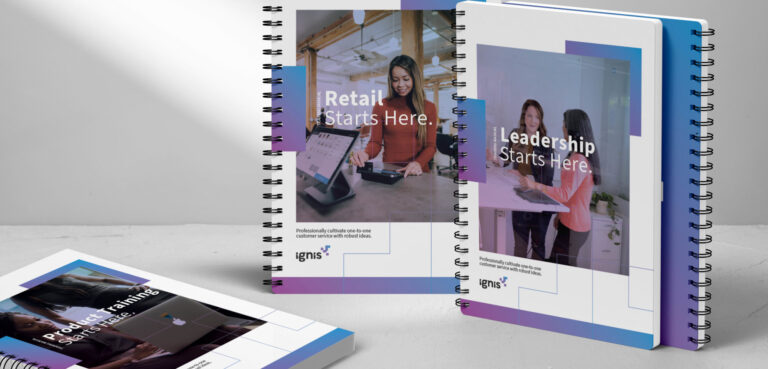
- Wire-O binding: a double-loop metal wire
- Comb binding: a plastic spine with teeth
Each method balances cost, durability, appearance, and functionality differently. Key factors to evaluate include page count, paper weight, intended lifespan, budget, production timeline, and how the document will be used. A training manual that needs to lie flat, for example, calls for a different binding than a short event program.
Binding also affects presentation. It guides how smoothly pages turn, whether a document opens 360 degrees, how it sits on a table, and how it withstands frequent handling. Choosing thoughtfully enhances readability and supports your message. If you’re comparing perfect binding vs saddle stitch for a booklet or considering saddle stitch vs wire-o binding for a manual, understanding these differences will help you zero in on the best fit within your binding options.
Saddle Stitch Binding Explained
Saddle stitch binding secures folded sheets with two or more staples through the spine. Pages are printed as spreads, nested, and stapled along the fold to create a crisp booklet. Because sheets are folded, page counts must be in multiples of four and typically range from 8 to about 64 pages, depending on paper thickness.
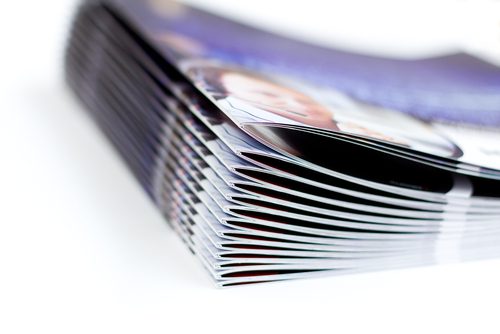
Use saddle stitch for concise documents that benefit from a slim, professional profile. Common applications include custom printed brochures, lookbooks, playbills, event programs, catalogs with limited pages, newsletters, zines, and product booklets. Its simplicity and speed make it a go-to for marketing collateral and handouts. Picking the right booklet printing format and options can help you convey your message better.
Advantages include cost efficiency at low to moderate page counts, quick turnaround, lightweight mailing, and a clean edge that feels like a mini magazine. Saddle-stitched pieces can open fairly flat with thinner stocks, and the seamless spine looks modern in racks and displays. When you’re stacking types of binding for a short campaign, saddle stitch often delivers the best value.
Wire-O Binding: A Closer Look
Wire-O binding uses a double-loop metal wire threaded through punched holes along the edge of the document. Each page turns independently, allowing the book to lie flat or fold back on itself. You can pair it with soft or hard covers, including clear fronts and rigid backs for durability.
Wire-O is ideal for workbooks, on-the-job training manuals, reference guides, financial reports, engineering documents, calendars, notebooks, cookbooks, and printed presentations for sales and business meetings where note-taking and hands-free use are important. It shines when readability and page control matter most.
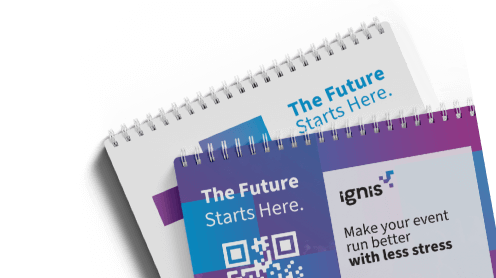
Benefits for reports and presentations include true lay-flat performance, precise page alignment, and effortless turning without spine resistance. The wire element lends a premium, boardroom-ready look and supports mixed media like tabs, dividers, and inserts without straining the spine. With sturdy covers, Wire-O delivers excellent longevity for frequent use. For many teams comparing saddle stitch vs wire-o binding as binding options, this method wins when daily reference and ease of use are top priorities when creating an effective booklet for your business.
Comparing Saddle Stitch and Wire-O Binding
Both methods are proven, but they excel in different scenarios. Saddle stitch is streamlined and economical for shorter documents. Wire-O prioritizes usability and longevity for materials that will be referenced repeatedly. If you’re still weighing perfect binding vs saddle stitch for a thicker brochure, remember that perfect binding delivers a square spine and a book-like feel, while saddle stitch keeps short pieces lean and cost-effective.
| Feature | Saddle Stitch | Wire-O |
|---|---|---|
| How it binds | Staples through the folded spine | Double-loop metal wire through punched holes |
| Page count range | Multiples of 4; typically 8–64 pages (stock dependent) | Wide range; accommodates thicker books and mixed stocks |
| Lay-flat performance | Opens fairly flat with lighter stocks | Fully lay-flat; folds back 360 degrees |
| Durability | Good for short-term or light use | Excellent for frequent handling and long-term reference |
| Look and feel | Clean, magazine-like edge | Premium, professional wire spine |
| Cost profile | Most budget-friendly for short documents and large runs | Higher due to punching and wire; strong value for usability |
| Custom elements | Limited inserts; page creep considerations | Handles tabs, dividers, and varied stocks easily |
| Mailing and portability | Lightweight and compact | Slightly bulkier; protective covers available |
Cost considerations: Saddle stitch is typically the most economical for low to moderate page counts and scales efficiently for high quantities. Wire-O tends to cost more because it requires hole punching and metal elements, but the added functionality can justify the investment for manuals, training materials, or client-facing presentations. For high-volume, short documents, saddle stitch usually wins on unit cost. For lower-volume, high-usage documents, Wire-O often delivers better total value over time. When comparing saddle stitch vs wire-o binding to other types of binding, think about both unit price and the cost of user frustration; lay-flat can pay for itself in productivity.
Durability and lifespan: Saddle stitch is well-suited to short-term campaigns and occasional use. Wire-O offers superior resilience for daily handling, frequent page turns, and long-term reference, especially when paired with protective covers.
Choosing the Right Binding for Your Needs
Start with your document’s purpose, audience, and lifespan. Consider how often it will be used, whether it needs to lie flat, and how many pages it contains. Think about tabs or inserts, mailing weight, and the impression you want to make. If you’re evaluating perfect binding vs saddle stitch for a catalog, or saddle stitch vs wire-o binding for training, our team can help you align format with function across your binding options.
- Purpose and usage: For marketing handouts, event programs, and compact catalogs, saddle stitch delivers a polished, cost-effective finish. For instructional content, sales decks, training materials, and any document where note-taking or hands-free reference matters, Wire-O is the better choice. Using a perfect bound booklet is appropriate for large documents that will be handled frequently.
- Page count and paper thickness: Keep saddle stitch within practical limits to avoid bulky spines and page creep. Wire-O accommodates higher page counts and mixed stocks without compromising performance.
- Functionality: Choose Wire-O when true lay-flat or fold-back use is essential. Opt for saddle stitch when a sleek profile and simple page flow fit the content.
- Durability and presentation: Upgrade to heavier covers or specialty stocks to enhance longevity and perceived quality for either method.
- Proof and samples: Request print samples when possible to evaluate how each binding looks and feels before finalizing your choice.
Need help visualizing your options? Mimeo can prototype both types of binding so you can compare, annotate, and decide with confidence.
Quick Recommendations
- Best for short brochures, programs, and slim catalogs: Saddle stitch
- Best for manuals, workbooks, and reference documents: Wire-O
- Prioritize lower unit cost for high-quantity, short documents: Saddle stitch
- Prioritize usability, longevity, and lay-flat performance: Wire-O
When in doubt, match the binding to how the document will be used day to day. If readers need to write in it, flip pages frequently, or keep it open on a desk, Wire-O is a smart investment. If you want a streamlined booklet with a sharp, magazine-like aesthetic at a great price, saddle stitch is hard to beat. For broader planning, keep perfect binding vs saddle stitch and saddle stitch vs wire-o binding on your shortlist as you review binding options and other types of binding.
Ready to choose? Our experts at Mimeo will recommend the best format, paper, and finishing for your timeline and budget, then deliver print and digital versions that work the way your team does. Create your free account today to print saddle stitch or wire-o documents.

Shari Cooke
Director of Customer Service
Shari Cooke is Director of Customer Service for Mimeo Business US, with more than 12 years at Mimeo and a background in graphic design that gives her a unique eye for both the creative and operational sides of print. Based in Memphis, she leads the team that keeps customer orders running smoothly from file to delivery. Her posts help businesses avoid common print pitfalls and get professional results, drawing on years of solving real customer challenges firsthand.

 Mimeo Print
 Mimeo Digital for Participants
 Mimeo Marketplace
 PrintX
 Mimeo Photos