




 By Mia Conway
•
5 May 2026
•
Updated 31 Jul 2026
•
11 min read
•
Design & Print Production
By Mia Conway
•
5 May 2026
•
Updated 31 Jul 2026
•
11 min read
•
Design & Print Production
Choosing between short run and bulk printing impacts your budget, timelines, inventory, and sustainability outcomes. This guide breaks down each option, compares costs, and shows when to use each approach so you can move efficiently from concept to delivery.
It also answers common questions about cost, turnaround time, and when each method makes the most sense. By the end, you will be able to choose the right print strategy based on your quantity, timeline, and on-demand print platform.
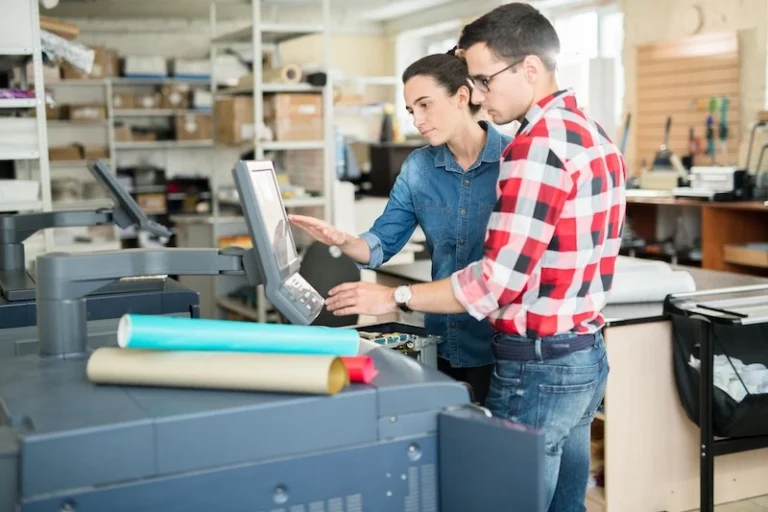
Short Run vs Bulk Printing: Quick Answer
Short run printing is best for smaller quantities, fast turnarounds, personalization, and projects that change often. Bulk printing is best for large quantities, consistent materials, and the lowest cost per piece at scale.
Use short run if you need flexibility. Use bulk printing if your content is final and your audience is large. Many teams use both: bulk for evergreen materials and short run for regional, seasonal, or frequently updated pieces. You can maximize your print budget by picking the right process for each project.
What Short Run and Bulk Printing Mean for Your Project
Short run printing covers smaller quantities, typically 10 to 500 pieces for booklets, catalogs, manuals, and marketing materials. Lightweight items like custom flyers or branded postcards may scale up to about 2,000. You may also see this called on-demand printing or short run digital printing.
Bulk printing starts at several hundred copies and scales into the thousands or tens of thousands. It is often associated with offset or high-volume production. Many teams refer to this as volume printing because it supports large-scale distribution.
Production workflows differ:
- Short run uses digital processes with minimal setup, direct-to-press files, and fast changeovers
- Bulk printing requires upfront setup such as plates and press preparation, but delivers lower cost per unit at scale
Choose your print run based on both quantity and flexibility needs.
Typical use cases:
- Short run: prototypes, test markets, personalized kits, event materials, seasonal updates
- Bulk: nationwide campaigns, packaging, large catalog drops, consistent long-term content
If your content changes often, short run is usually the better fit. If it stays consistent, bulk printing is more efficient.
Cost, Speed, and Inventory: Comparing Short Run and Bulk
Cost structures vary significantly.
- Short run has low setup costs but higher per-unit pricing
- Bulk printing requires higher upfront investment but offers much lower per-unit costs at scale
Example:
- 200 brochures: short run is typically more cost-effective
- 5,000 brochures: bulk printing usually delivers the lowest total and per-unit cost
To find your break-even point, evaluate quantities in tiers such as 250, 1,000, and 5,000.

Turnaround times also differ:
- Short run can be produced in a few days or even same day
- Bulk printing requires longer lead times due to setup and finishing
Inventory considerations:
- Bulk orders require storage and may tie up cash
- Short run allows you to print only what you need and update content quickly
A hybrid strategy often works best. Use bulk for evergreen materials and short run for content that changes frequently.
Design Flexibility, Quality, and Personalization
Short run printing gives you more flexibility:
- Update designs between batches
- Test variations
- Run A and B versions
- Personalize using variable data
This is ideal for direct mail, event materials, and targeted campaigns.
Quality is strong across both methods:
- Digital printing delivers sharp text and vibrant color
- Bulk printing provides consistent color across large quantities and supports advanced finishing options
Choose based on your priority:
- Flexibility and personalization: short run
- Consistency at scale: bulk
Sustainability and Supply Chain Considerations
Sustainable on-demand printing depends on how well your print run matches actual demand.
- Bulk printing can lead to overproduction and waste
- Short run reduces excess inventory and supports just-in-time production
Bulk printing is more energy efficient per piece at high volumes, but only if everything is used.
Short run also supports localized production:
- Shorter shipping distances
- Lower transport emissions
- Faster response to demand changes
To improve sustainability with either approach:
- Use recycled or responsibly sourced paper
- Choose low-VOC inks or toners
- Optimize layouts to reduce waste
- Minimize packaging
- Right-size shipments
How to Choose the Right Option
Use this checklist to guide your decision:
- Project goals: Are you scaling or testing?
- Timeline: Do you need materials in days or weeks?
- Budget: Are you minimizing upfront cost or cost per unit?
- Content updates: Will your materials change often?
- Distribution: Centralized or localized delivery?
Look for a print partner that offers:
- Fast online proofing
- Flexible order sizes
- Integrated print and fulfillment
- Inventory tracking and visibility
- Consistent quality
Working with a provider that supports both short run and bulk printing makes it easier to adapt your strategy.
Common Scenarios
New product launch in test markets
Best approach: Short run with variable data
Why: Personalize content and iterate quickly without excess inventory
Annual catalog for nationwide distribution
Best approach: Bulk printing
Why: Lower unit cost and consistent quality across large volumes
Seasonal campaign with regional variations
Best approach: Hybrid
Why: Combine bulk core materials with short run localized updates
Training manuals with frequent updates
Best approach: On-demand short run
Why: Avoid obsolete inventory and keep content current
Final Takeaway
Start by mapping your audience, timeline, and update frequency. Then match your print strategy to those needs.
Short run works best for flexibility and speed. Bulk printing delivers efficiency at scale. In many cases, a mix of both gives you the best results.
The right approach balances cost, quality, and agility so your materials stay relevant and effective.
Still not sure how to choose? Get started with Mimeo today and talk to our team of experts.
Frequently Asked Questions
What is the difference between short run and bulk printing?
Short run printing produces smaller quantities with faster setup and more flexibility. Bulk printing produces larger quantities with more upfront setup but a lower cost per piece at higher volumes.
When should I choose short run printing?
Choose short run printing when you need a small quantity, fast turnaround, personalized content, test materials, event-specific pieces, or materials that may change soon.
When should I choose bulk printing?
Choose bulk printing when you need thousands of identical pieces, stable content, consistent quality across a large order, and the lowest possible unit cost.
Is short run printing more expensive?
Short run printing usually has a higher cost per piece, but it avoids large setup costs and reduces waste. For smaller orders, it is often the more cost-effective option.
Is bulk printing always cheaper?
Bulk printing is usually cheaper per piece at higher quantities, but it may not be cheaper overall if you overorder, need storage, or have to discard outdated materials.
What is the best option for frequently updated materials?
Short run printing is usually best for frequently updated materials because you can print smaller batches, revise content quickly, and avoid obsolete inventory.
Can I use both short run and bulk printing?
Yes. A hybrid strategy often works best. Use bulk printing for stable core materials and short run printing for localized, personalized, seasonal, or frequently updated pieces.
What you should read next

Mia Conway
Director of Customer Success
Mia Conway is Director of Customer Success at Mimeo, with nearly a decade of experience supporting the company's customers and a background in account management and production spanning brands like Calvin Klein. She specializes in understanding what customers actually need (not just what they ask for) and turning that insight into smoother, more reliable print programs. Her posts help businesses navigate the practical side of ordering, managing, and distributing printed materials.

 Mimeo Print
 Mimeo Digital for Participants
 Mimeo Marketplace
 PrintX
 Mimeo Photos