



 By Ethan Cohen
•
26 Sep 2025
•
Updated 6 Oct 2026
•
10 min read
•
Industry Applications
By Ethan Cohen
•
26 Sep 2025
•
Updated 6 Oct 2026
•
10 min read
•
Industry Applications
Direct mail fundraising is a highly effective, tangible strategy that nonprofits use to engage donors, build relationships, and drive donations through physical mail like letters, postcards, and appeals. While digital channels continue to grow, direct mail remains one of the most reliable ways to connect with supporters in a meaningful, tangible way.
For nonprofits, direct mail fundraising is more than sending letters. It is a strategic approach that combines targeted messaging, thoughtful design, and high-quality production to build relationships and inspire action. When executed well, it can increase donor retention, boost gift frequency, and strengthen long-term fundraising results.
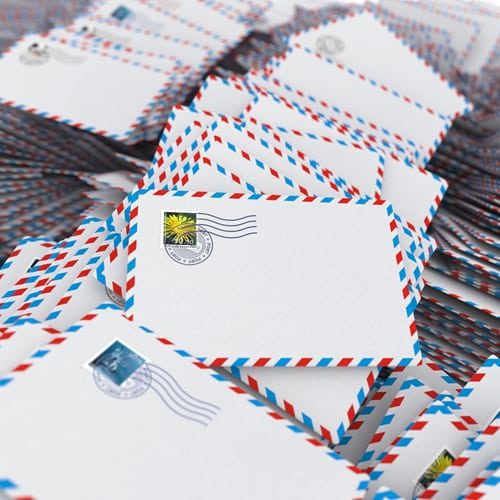
Direct mail fundraising is often used by nonprofits to acquire new donors, re-engage lapsed supporters, and increase the frequency and size of donations.
What Are Fundraising Direct Mail Services?
Fundraising direct mail services are solutions that help nonprofits plan, produce, and send targeted mail campaigns to donors. These services typically include audience segmentation, personalization, print production, and mailing logistics.
By combining strategy with high-quality execution, nonprofits can deliver campaigns that feel personal, relevant, and easy for donors to respond to.
Key Direct Mail Fundraising Strategies That Drive Results
SSuccessful direct mail fundraising relies on a few core strategies that consistently improve response and donor retention:
- Targeted segmentation: Divide donors by giving history, engagement level, or interests to deliver more relevant and effective appeals
- Compelling storytelling: Use clear, emotionally engaging narratives and strong visuals to help donors connect with your mission
- Multichannel reinforcement: Follow up mail with email or digital touchpoints to increase visibility and response rates
- Clear call to action (CTA): Make it easy to give with reply envelopes, QR codes, or personalized donation links
- Donor retention focus: Use mail to thank supporters, recognize contributions, and encourage ongoing giving
When these elements are aligned, direct mail becomes a consistent driver of donor engagement and long-term value. For more on keeping donors engaged long term, see our guide to member retention strategies for associations.
Why Should Nonprofits Invest in Direct Mail Fundraising?
Direct mail remains a core fundraising channel because it creates a tangible, personal connection with donors. Unlike digital messages that can be ignored or missed, physical mail is more likely to be opened, read, and remembered. The Nonprofit Leadership Alliance notes that direct mail solicitation feels more personal than requests made online, which can increase engagement.
Nonprofits that leverage direct mail services can create tailored campaigns that speak to their members’ interests, improving response rates and fostering long-term loyalty. A well-executed mailing strategy allows organizations to reach new and existing donors, encouraging repeat gifts and strengthening overall stewardship.
Finally, nonprofit mail campaigns allows associations to showcase their impact visually and emotionally. Including stories, images, and direct mail fundraising strategies in a physical mailer makes it easier for recipients to understand the importance of their support, which can lead to more consistent giving.
How Direct Mail Personalization Increases Donor Engagement
Personalization is one of the most effective ways to increase response rates and donor engagement. When mail feels relevant and tailored, recipients are more likely to respond. Using an association print and fulfillment service ensures that every mailing is produced accurately, with attention to detail in envelope design, copywriting, and overall presentation.
By personalizing the direct mail fundraising experience, nonprofits can improve engagement. Addressing donors by name, referencing their past contributions, or tailoring messages to specific giving levels makes the fundraising appeal feel more personal. These strategies strengthen donor-centric relationships and encourage long-term involvement in the nonprofit’s fundraising program.
Additionally, professional direct mail services help nonprofits efficiently segment their audience. By identifying high-priority allegiance groups, organizations can deliver targeted campaigns that maximize fundraising results while reducing wasted resources.
What Makes a Direct Mail Campaign Effective?
An effective direct mail campaign starts with a clear objective. Whether the goal is donor acquisition, retention, or increasing gift size, every element of the campaign should support that outcome.
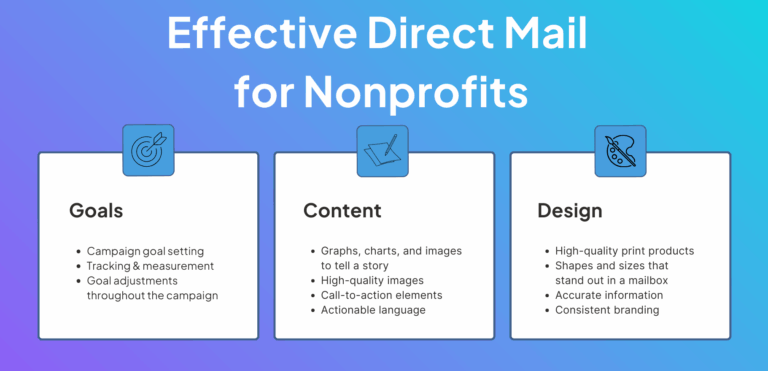
Strong campaigns combine clear messaging with compelling storytelling. Instead of overwhelming the reader, focus on one core idea and make it easy to understand why it matters. Use real examples, impact statements, or donor stories to make the appeal more relatable and credible.
Design also plays a critical role. A clean layout, strong hierarchy, and intentional use of imagery help guide the reader through the message. Including a clear call to action is essential, whether that is returning a donation form, visiting a personalized URL, or scanning a QR code. For tips on crafting appeals that drive response, see our guide to donor appeal printing and mailing for nonprofits.
The most effective campaigns are built with both print and response in mind. When content, design, and delivery work together, direct mail becomes a reliable driver of donor engagement and giving.
What Are Best Practices for Mailing Appeals and Fundraising Letters?
Strong fundraising mailings are clear, focused, and easy to respond to. The most effective appeals prioritize one key message and guide the reader toward a single, specific action.
Clarity matters more than volume. Keep copy concise, use readable formatting, and make important information easy to find. A well-structured letter with a clear narrative will outperform a crowded or overly complex design.
Personalization should feel intentional, not forced. Referencing a donor’s past support or aligning the message with their interests helps make the appeal more relevant and increases the likelihood of response.
It is also important to make giving simple. Include multiple response options, such as return envelopes, online donation links, or QR codes, so donors can choose what works best for them.
Finally, testing and iteration are key. Small adjustments to messaging, format, or timing can lead to meaningful improvements over time. Reviewing results after each campaign helps refine your approach and build stronger performance with each mailing.
How Can Direct Mail and Digital Channels Work Together?
Combining direct mail with digital channels increases response rates and makes it easier for donors to take action. Physical mail creates tangible engagement, while online components like email, social media, or online fundraising links facilitate immediate action.
Nonprofits can enhance campaigns with multichannel approaches. For example, sending a direct mail appeal followed by an email reminder reinforces messaging and increases the likelihood of donation. Direct mail solutions for associations and nonprofits run on these best practices.
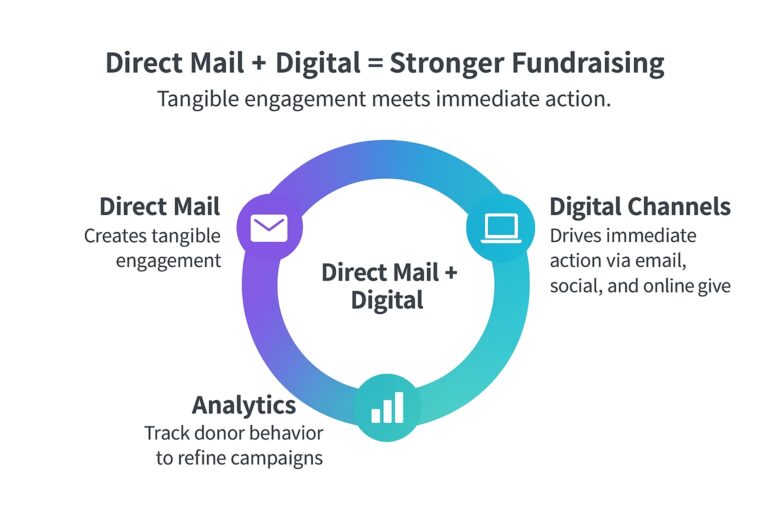
This integration also allows nonprofits to track donor behavior more effectively. Analytics can show which recipients engage with both physical and digital elements, helping organizations refine future fundraising efforts.
How Do Allegiance Groups Influence Fundraising Success?
Allegiance groups are segments of donors who demonstrate strong loyalty or long-term support for a nonprofit. Targeting these groups with specialized campaigns can significantly boost fundraising results.
By analyzing giving patterns and donor preferences, nonprofits can craft mailings that resonate with each group. These donors are often more responsive to personalized solicitation and are likely to participate in programs like monthly giving or special projects.
Engaging allegiance groups with direct mail services enhances stewardship strategy, deepening relationships and encouraging ongoing support, which is crucial for sustained fundraising success.
What Tools and Services Support Direct Mail Fundraising for Nonprofits?
Nonprofits can leverage a variety of direct mail services and tools to enhance campaigns. Full-service fundraising agencies like Meyer Partners provide expertise in copywriting, print production, mailing logistics, and fundraising strategies tailored to nonprofit organizations.
Other tools include segmentation software, fundraising toolkits, and direct mail fundraising services that streamline production. These solutions allow nonprofits to produce high-quality mailings efficiently and with greater cost-effective precision.
Partnering with experienced vendors ensures that every campaign maintains quality and accuracy, reducing the risk of errors while maximizing ROI for the nonprofit’s fundraising program.
Key Direct Mail Fundraising Metrics to Track
Tracking performance helps nonprofits refine campaigns and improve results over time. Focus on:
- Response rate: The percentage of recipients who take action after receiving a mailing
- Average gift size: The typical donation amount generated by a campaign
- Donor retention rate: How many donors continue giving over time
- Return on investment (ROI): The revenue generated compared to campaign costs
- Channel conversion: How recipients respond across mail and digital touchpoints
Monitoring these metrics makes it easier to identify what is working and where to optimize. If you’re just getting started, here are 6 steps to raising funds with a print campaign that walks you through the process from start to finish.
How Should Nonprofits Track Results and ROI from Direct Mail?
Measuring direct mail performance is essential for improving results over time. Nonprofits should track key metrics such as response rate, donation amounts, and new donor acquisition to evaluate the impact of their mailings.
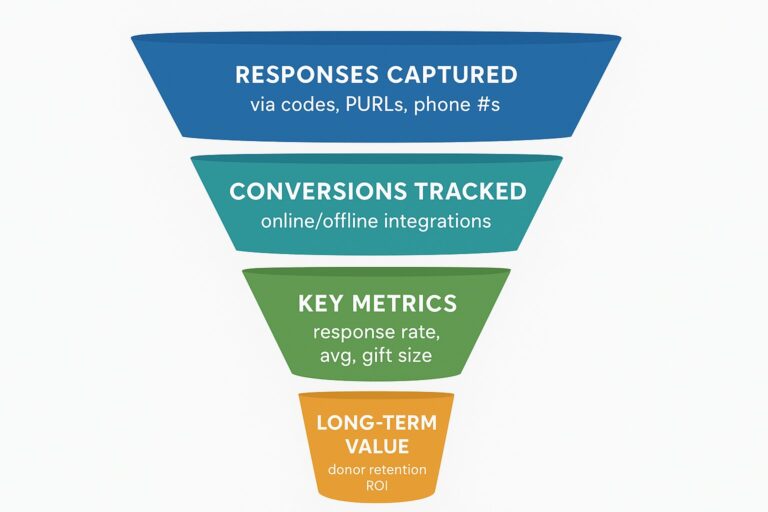
Integrating data analytics allows organizations to assess which messages, formats, or channels resonate most with donors. Tracking performance across direct mail and digital components provides a comprehensive view of campaign effectiveness.
Regular review of results also informs fundraising strategies, helping nonprofits refine direct mail services, improve donor engagement, and ensure the fundraising program continues to meet its goals.
When you’re ready to scale your fundraising efforts, Mimeo makes it easy to create, print, and deliver targeted direct mail campaigns from one platform. Get started with fundraising direct mail services today.
Frequently Asked Questions About Direct Mail Fundraising
Why should nonprofits use direct mail for fundraising when digital is so popular?
Direct mail remains one of the most effective channels for nonprofit fundraising because it feels personal and tangible. Many donors (especially older demographics) still prefer to give through mail. Studies show response rates for direct mail are often higher than digital-only campaigns, and when combined with email or social media, results improve even further.
How can direct mail services help us target the right donors?
Fundraising direct mail services can segment donor lists based on giving history, demographics, or interests. This means your appeals reach the people most likely to give, whether it’s lapsed donors who need a reminder, or loyal supporters ready for an upgrade. Personalization tools such as variable data printing allow each letter to include the donor’s name, past giving amount, or tailored messaging.
Is direct mail expensive for nonprofits compared to other channels?
While direct mail has higher upfront costs than email, it typically delivers a strong return on investment. Professional mailing services can help reduce costs through bulk postage discounts, efficient list management, and optimized design. More importantly, donors reached through direct mail often give larger average gifts than those acquired digitally, making it a worthwhile investment.
How can we measure the success of a direct mail campaign?
Nonprofits can track campaign performance by using unique response codes, personalized URLs (PURLs), or dedicated phone numbers. Services may also integrate mail campaigns with digital tools, allowing you to see when recipients respond online after receiving a mailer. Metrics like response rate, average gift size, and donor retention provide a clear picture of ROI and long-term value.
Key Takeaways
Direct mail remains one of the most effective ways for nonprofits to connect with donors and drive consistent giving. Personalization, clear messaging, and thoughtful design all play a role in improving response rates.
Combining direct mail with digital channels can increase engagement, while segmentation helps ensure each campaign reaches the right audience. Working with a professional provider simplifies execution and helps maintain quality across every mailing.
Ethan Cohen
Account Executive
Ethan Cohen is an Account Executive at Mimeo, having built his career here from Sales Development Representative to Team Lead and now full-cycle sales. He brings a strategic, relationship-driven approach to turning market opportunities into long-term client partnerships, including with nonprofits and associations looking to stretch their print and content budgets further. His posts help businesses think through how to build strong, sustainable sales processes and get real value from their vendor relationships.

 Mimeo Print
 Mimeo Digital for Participants
 Mimeo Marketplace
 PrintX
 Mimeo Photos