




 By Mia Conway
•
21 Nov 2022
•
Updated 21 Jul 2026
•
5 min read
•
Digital & Content Distribution
By Mia Conway
•
21 Nov 2022
•
Updated 21 Jul 2026
•
5 min read
•
Digital & Content Distribution
Virtual training has become a core part of modern training programs. Whether you deliver leadership development, association education, or customer training, virtual training is now essential to how training is delivered. Trainers can no longer rely on in-person attendance alone. Learners expect flexible, accessible training that fits into busy schedules and evolving work environments.
Industry trends confirm this shift. Cindy Huggett’s State of Virtual Training research shows that 62 percent of organizations offer hybrid training or plan to do so. Many virtual training programs combine instructor-led sessions, online courses, and elearning assets to support professional development. Virtual training platforms make it possible to deliver training to participants across locations, but success depends on how well the experience is designed and supported.

Current State of Virtual Training
The State of Virtual Training highlights a gap between what virtual learning promises and what many learners experience today. Best practices recommend that virtual training sessions be shorter and more focused than in-person classes. In reality, the average synchronous virtual classroom session still runs about 60 minutes, and nearly one-third of courses exceed two hours.
Research from the Ken Blanchard Companies reinforces this challenge. More than half of learning and development professionals report dissatisfaction with their virtual training delivery. One participant noted that attendance and interaction decline when learners expect to watch recordings later rather than engage in real-time. This dynamic makes it harder to keep participants active and focused throughout a session.
Virtual Content Challenges
Engaging virtual training requires more than transferring classroom slides into webinars. In-person training benefits from printed course materials, hands-on activities, group discussions, and real-world scenarios that deepen understanding. The physical classroom creates an environment where participants interact naturally, collaborate with peers, and build rapport with instructors.
In a virtual environment, training material can feel fragmented. Learners may need to manage a video conference, a workbook, assignments, and online resources at the same time. For training firms and facilitators, there is also the challenge of protecting proprietary content while delivering a premium learning experience. Virtual instructor-led training must balance accessibility, security, and engagement without disrupting the flow of the course.

Mimeo Digital was created to address these challenges. It is a courseware distribution platform designed to help trainers deliver high-end virtual training content while protecting intellectual property. Training teams use it to distribute instructional content, videos, presentations, and multimedia assets in a secure, polished learning environment.
Mobile-Friendly Virtual Content
Effective virtual training assumes that learners access content from multiple devices. During a virtual classroom session, participants often use one screen for Zoom or other collaboration tools and a second device for course materials. Some learners may rely entirely on a phone or tablet.
The Mimeo Digital learner app supports this reality by working across browsers, smartphones, and tablets. Trainers can deliver content without redesigning materials for different devices. Once uploaded, training material is automatically optimized for responsive viewing, supporting a smooth learning experience across devices and settings.
Offline Access for Virtual Learning
Virtual training participants also face bandwidth and connectivity challenges. When internet access is unstable, learners can miss key moments in a session or struggle to access course materials.
Offline access helps solve this problem. With permission, learners can make content available offline within the app, similar to downloading media for travel. Participants can continue their course without disruption while content remains protected. This approach supports effective virtual training delivery without increasing the risk of unauthorized sharing.
Branded Digital Course Libraries
In-person training often reinforces brand identity through printed materials and consistent design. Virtual learning needs the same cohesion. Without a centralized system, content delivery can feel scattered and confusing for learners.
Mimeo Digital provides a branded digital library where all course materials live in one place. Logos, banners, and brand colors help learners recognize the correct classroom and course context. This structure supports clarity, reinforces professionalism, and helps participants remember the training provider long after the course ends.
Silent Document Security
Protecting intellectual property is a critical objective for trainers and facilitators. Virtual training content represents significant investment, and security should not rely on constant reminders or restrictions that disrupt the learning environment.
Mimeo Digital offers silent security features that work behind the scenes. Trainers can set expiration dates, revoke access when a participant leaves a course, or apply watermarks to discourage screenshots. These controls protect content while allowing instructors to focus on delivering engaging virtual training rather than managing permissions.
Ideas to Try for More Interactive Virtual Training
Many virtual training programs struggle with interaction. Simple tools can help trainers engage participants more deeply. Polls and quizzes can check understanding in real time. Small breakout groups encourage collaboration and peer discussion before the class reconvenes. Scenario-based simulations help learners apply new skills in a real-world context.
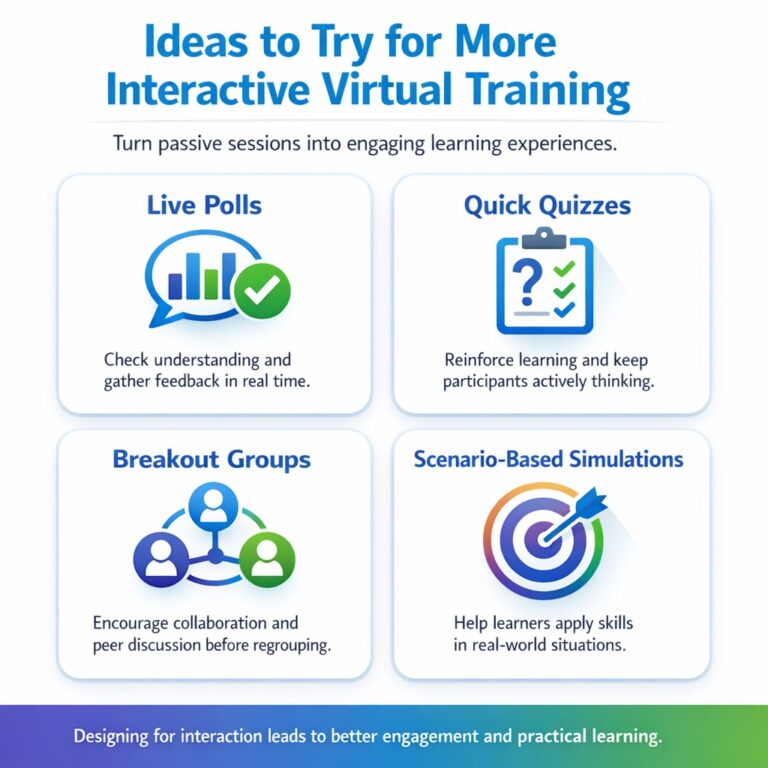
These techniques support effective virtual training by turning passive sessions into interactive experiences. When trainers design sessions with interaction in mind, participants are more likely to engage, ask questions, and gain practical value from the course.
Delivering Engaging Virtual Training with Confidence
Delivering engaging virtual training that reflects your brand and expertise is challenging. Trainers must balance content delivery, interaction, and security across many virtual training formats. With the right platform, it becomes easier to create a learning environment where participants stay focused, collaborate, and apply what they learn.
Mimeo Digital helps training teams deliver professional, engaging virtual learning experiences that protect content and support best practices. It gives trainers the confidence to focus on instruction, facilitation, and meaningful learning outcomes rather than logistics. Get started with Mimeo today.

Mia Conway
Director of Customer Success
Mia Conway is Director of Customer Success at Mimeo, with nearly a decade of experience supporting the company's customers and a background in account management and production spanning brands like Calvin Klein. She specializes in understanding what customers actually need (not just what they ask for) and turning that insight into smoother, more reliable print programs. Her posts help businesses navigate the practical side of ordering, managing, and distributing printed materials.

 Mimeo Print
 Mimeo Digital for Participants
 Mimeo Marketplace
 PrintX
 Mimeo Photos