




 By Hannah Madden
•
4 Sep 2025
•
Updated 18 Jun 2026
•
9 min read
•
Direct Mail & Print Marketing
By Hannah Madden
•
4 Sep 2025
•
Updated 18 Jun 2026
•
9 min read
•
Direct Mail & Print Marketing
Print on demand is one of the most exciting opportunities for entrepreneurs looking to start a business with minimal upfront investment. A print-on-demand business allows you to sell custom products like brochures, business cards, catalogs, packaging, posters, and marketing materials without holding inventory. When a customer places an order, a print-on-demand supplier produces and ships the item directly to them.
This article is worth reading because it walks you through the print-on-demand business model step by step, explains the pros and cons, and shows you how to start a print-on-demand business using online platforms. Whether you want to grow your business, sell custom print products, or explore the best print-on-demand services, you’ll find practical insights here.
How to Start a Print on Demand Business in 7 Steps
Starting a print on demand business does not require a large budget or complex infrastructure. By following a clear, step-by-step process, you can launch quickly and build a business that scales as demand grows.
Step 1: Choose the Type of Print Products You Want to Sell
Start by deciding which print on demand products you will offer. For many small business owners, paper products are a strong place to begin. These include brochures, business cards, catalogs, posters, packaging, booklets, and marketing materials. Focus on products that businesses regularly reorder or update, since these are ideal for print on demand.
Step 2: Identify a Profitable Niche and Target Audience
Next, narrow your focus to a specific niche. Instead of selling generic print products to everyone, target a clear audience such as small businesses, consultants, event planners, or marketers. Choosing a niche helps you create more relevant products, price them effectively, and market your print on demand business with less competition.
Step 3: Create or Prepare Your Print Designs
Once you know what you are selling, prepare your designs. These can be created in-house, with a designer, or using professional templates. Make sure files meet print requirements such as bleed, resolution, and color settings. High-quality design is critical for professional print products and long-term customer satisfaction.
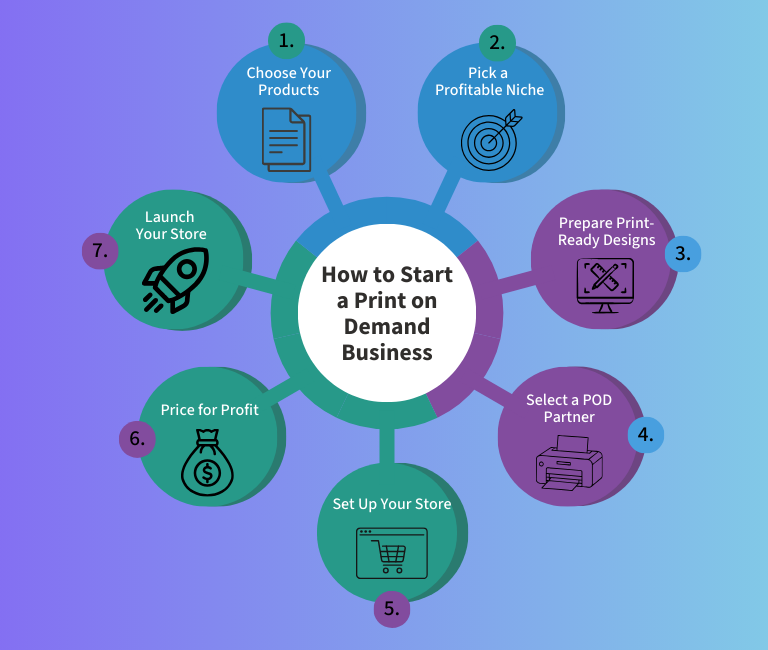
Step 4: Select a Reliable Print on Demand Supplier
Your print on demand supplier handles production and shipping, so reliability matters. Look for a POD provider that offers consistent print quality, multiple paper options, fast turnaround times, and dependable delivery. Ordering samples before selling helps confirm quality and sets clear expectations for customers.
Step 5: Set Up Your Online Store or Marketplace Presence
Create an online presence where customers can browse and order your products. This could be a dedicated storefront or a marketplace that supports print on demand workflows. Make sure product descriptions clearly explain formats, customization options, and use cases. A professional setup builds trust and increases conversion.
Step 6: Price Your Products for Sustainable Profit
Pricing should cover production costs, platform fees, and shipping while leaving room for profit. Print on demand typically has higher per-unit costs than bulk printing, so pricing should reflect the value of customization, convenience, and quality. Testing different price points can help you find the right balance.
Step 7: Launch, Market, and Improve Over Time
After launch, focus on marketing and optimization. Use SEO, email outreach, and social promotion to reach your audience. Pay attention to which products sell best, where customers drop off, and what questions they ask. Over time, refine your offerings, expand product categories, and improve margins.
What Is Print on Demand and How Does It Work?
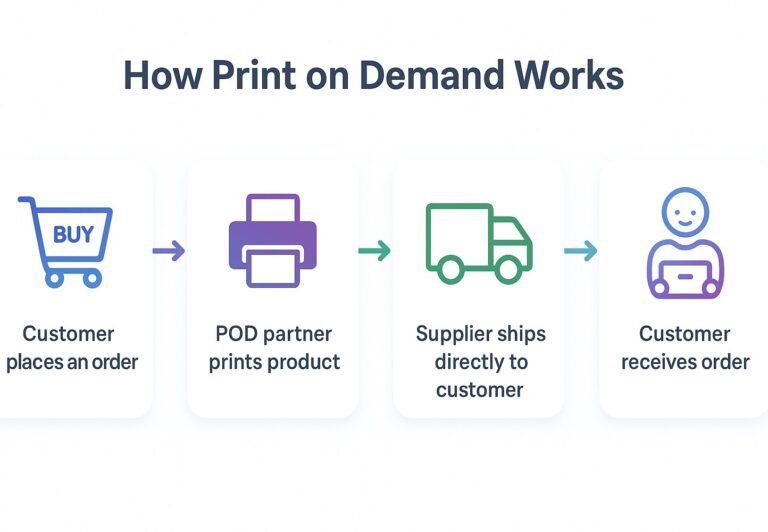
Print on demand (POD) is a fulfillment model that allows you to sell custom products without stocking inventory. Instead of producing items in bulk, you only pay for them after a sale occurs. This makes print-on-demand a business with minimal financial risk.
Here’s how it works: a customer places an order in your print-on-demand store or online, on-demand marketplace. That order is sent to your print-on-demand partner, who prints the design on your product and ships it directly to the buyer. This system allows entrepreneurs to start a print-on-demand business with little overhead while focusing on creating high-quality designs.
The print-on-demand model is part of a broader ecommerce trend, similar to dropshipping, but it specializes in custom print products. By choosing the right print-on-demand supplier, you can ensure high-quality output and a positive customer experience, which are key to building a profitable print-on-demand business.
Why Start a Print-on-Demand Business Today?
The print-on-demand industry has grown rapidly in recent years. Consumers increasingly value personalized and custom products for business, home, and personal use. From corporate brochures to promotional posters, print-on-demand services make it easy to provide professional materials on demand.
Starting a print-on-demand business is a way to create a business with no money or minimal upfront costs. You don’t need a warehouse, large equipment, or upfront inventory. Instead, you focus on designing and marketing your print-on-demand products while your supplier handles production and shipping.
For entrepreneurs, print-on-demand represents a flexible business concept that allows them to test ideas, scale at their own pace, and grow an online business without heavy risk.
Pros and Cons of a Print-on-Demand Business
Pros:
- Minimal upfront investment and low financial risk.
- No inventory management or shipping responsibilities.
- Flexibility to create a wide variety of print-on-demand products, from brochures to marketing collateral.
- Ability to test different products or formats without committing to bulk orders.
Cons:
- Profit margins are generally lower than traditional bulk printing.
- Reliance on the print-on-demand supplier for quality, production time, and shipping.
- Limited control over packaging and shipping options.
Understanding the pros and cons is important for planning a successful POD business. It allows you to weigh potential benefits against challenges and make informed decisions about which print-on-demand products to offer.
What Types of Print-on-Demand Products Can You Sell?
Print-on-demand products aren’t limited to merchandise. In fact, the majority of profitable print-on-demand businesses focus on print materials that businesses and individuals use regularly. Examples include:
- Brochures for businesses and marketing campaigns.
- Business cards for entrepreneurs and professionals.
- Catalogs for product or service showcases.
- Packaging materials for small businesses or ecommerce stores.
- Posters and prints for home, office, or promotional purposes.
- Stationery like letterheads, envelopes, and custom notepads.

Selling these types of products allows you to target business owners, marketers, and event planners. High-quality print-on-demand products can convey professionalism and help clients communicate their message effectively. Custom products in these categories are highly sought after because they save clients time while providing a tangible result.
How to Choose a Profitable Niche for Your POD Business
Finding a niche is absolutely crucial to building a successful print-on-demand business. A niche allows you to focus your marketing efforts, create highly relevant and appealing print products, and attract the right target audience more efficiently. Without a clear niche, your products can get lost in a crowded market.
Some profitable niches include:
- Corporate materials: Brochures, reports, and presentations.
- Event-related print: Programs, invitations, and signage.
- Promotional marketing: Flyers, posters, and catalogs.
- Specialty office products: Custom letterhead, notepads, and packaging.
Setting Up Your Print-on-Demand Store or Online Presence
Your next step is to set up an online presence. You can start a print-on-demand business using platforms like Mimeo Marketplace. An online store lets you showcase your print-on-demand products, share detailed product descriptions, and manage customer orders efficiently.
When setting up your store, consider:
- Clear product categories to make it easy for customers to browse.
- High-quality product photos or mockups to highlight your print-on-demand products.
- Easy-to-read product descriptions that include key information about format, size, and customization options.
Finding the Right Print-on-Demand Supplier
Choosing the right print-on-demand supplier is crucial for a successful POD business. The supplier handles production, quality control, and shipping, so their reliability affects your brand’s reputation.
Look for suppliers who offer:
- High-quality print-on-demand products.
- Reliable production and shipping times.
- Free shipping or cost-effective fulfillment options.
- Easy-to-use interfaces for submitting designs.
Marketing Your Print-on-Demand Business Effectively
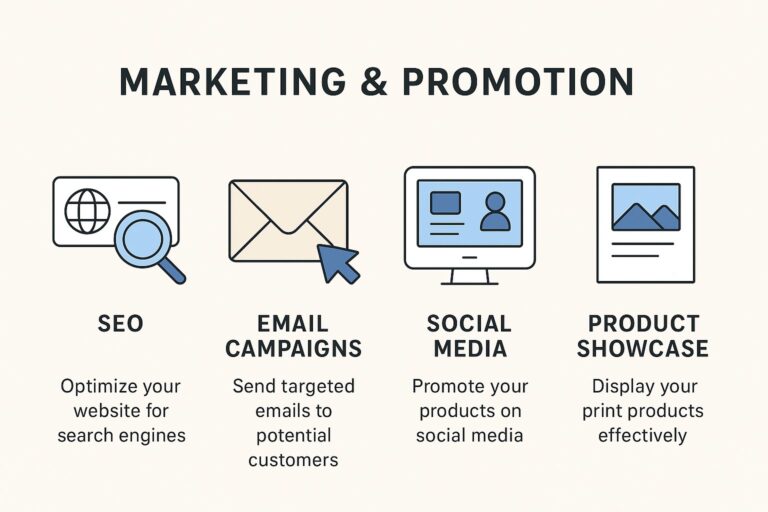
Once your print-on-demand store is set up, the next focus is marketing. Promoting your products to the right target audience increases sales and builds your brand.
Some strategies include:
- SEO optimization for your product listings and store.
- Email campaigns to potential customers.
- Social media promotion of your products and custom offerings.
- Offering promotional deals on first orders to encourage purchases.
Marketing is an ongoing process that complements product quality. By effectively promoting your products, you can grow your business and establish a strong reputation in your niche.
Print-on-Demand and Dropshipping: What’s the Difference?
Print-on-demand and dropshipping share similarities: they both allow you to sell without holding inventory. The difference is in product customization. Print-on-demand products are custom-made per order, whereas dropshipping products are often generic items sourced from suppliers.
The print-on-demand model offers more control over branding and quality. Entrepreneurs can create products tailored to a client’s specifications or design unique items for their business. This flexibility makes print-on-demand a preferred model for professional and business-oriented products.
Frequently Asked Questions About Print on Demand
Can I start a print-on-demand business with no money?
Yes, one of the biggest advantages of POD is minimal upfront investment. You typically don’t pay for inventory until after a sale occurs.
How do I ensure product quality?
Order samples from your print-on-demand supplier to check print quality, materials, and shipping times before selling.
What are the most profitable print-on-demand products?
Custom business materials like brochures, catalogs, marketing collateral, packaging, and stationery often have higher profit margins than generic products.
Final Takeaways for Starting a Print-on-Demand Business
- Print-on-demand is a low-risk business model that allows entrepreneurs to sell custom products without inventory.
- Focus on professional print products like brochures, catalogs, business cards, and packaging.
- Choosing a niche is key to attracting your target audience.
- Set up an online store or use marketplaces like Etsy to start selling.
- Select a reliable print-on-demand supplier to ensure high-quality products.
- Market your print-on-demand business consistently to grow sales and customer loyalty.
- By following these steps, you can start a profitable print-on-demand business that scales over time.

Hannah Madden
Content Marketing Manager
Hannah Madden is Content Marketing Manager at Mimeo, with nearly a decade of experience in content strategy, SEO, and storytelling. She specializes in making complex topics accessible, translating the nuances of print, document production, and workplace communications into content that's actually useful for the people who need it. Her posts cover everything from print best practices to content strategy for businesses that rely on professional documents.

 Mimeo Print
 Mimeo Digital for Participants
 Mimeo Marketplace
 PrintX
 Mimeo Photos